table of contents
Why Your LinkedIn Profile Is Your Most Powerful Career Asset
To optimize your LinkedIn profile, start by perfecting your visual branding with a professional headshot and custom background banner, then craft a value-driven headline that pairs your target role with niche expertise and business impact. Next, structure narrative-driven About and Experience sections around quantified achievements, integrate strategic keywords across your headline, summary, and skills, and maintain active engagement through thoughtful commenting and original content. These core steps turn your profile into a discovery engine for recruiters and decision-makers.
Your digital footprint is often the very first filter an executive recruiter, venture partner, or hiring committee uses when evaluating your capabilities. When considering your overall online presence, have you taken the time to Google yourself lately? If you do, your professional presence on LinkedIn will almost always appear as the number-one search result.
Recruiters rely on the platform heavily, with studies showing that roughly 87% of candidate sourcing takes place on LinkedIn. Rather than serving as a static archive of past duties, the platform functions as an active, living ecosystem for candidate discovery and career mobility.
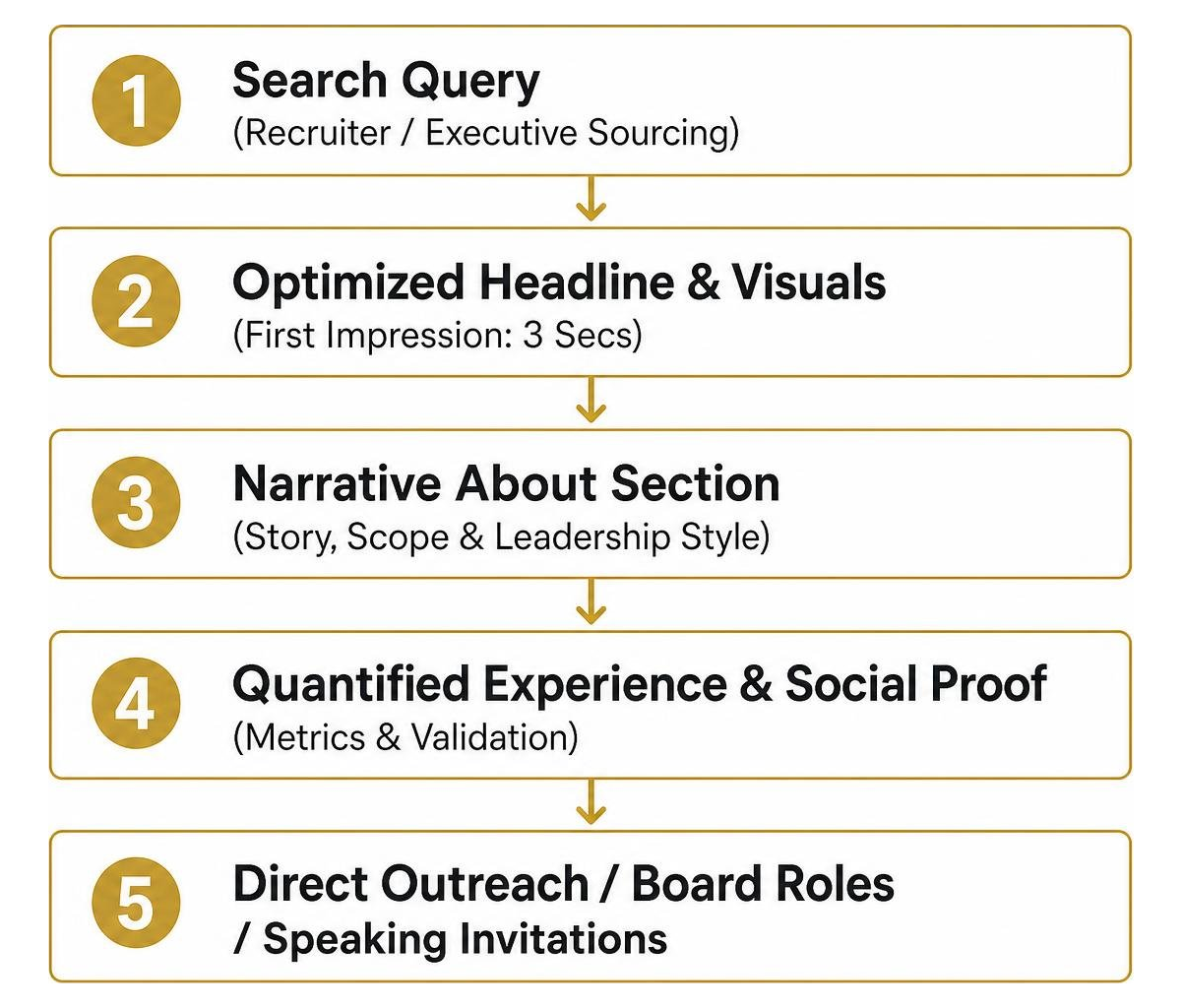
A polished presence creates leverage at every stage of your career:
- For college students and early-career talent, it bridges the gap between academic theory and real-world execution. It provides space to highlight co-ops, campus initiatives, and technical proficiencies long before a traditional corporate resume fills out.
- For mid-career professionals navigating a career transition, it allows you to reframe transferable accomplishments toward emerging target industries.
- For senior executives and C-suite leaders, it solidifies your industry authority, drives inbound speaking engagements, and opens doors to board opportunities without requiring you to apply through public job boards.
When you establish clear alignment across your digital footprint, you turn passive browsing into high-value professional conversations.
Core Visual and Structural Essentials for an Impactful LinkedIn Profile
Visual hierarchy dictates how a reader navigates your background. When someone lands on your page, you have fewer than three seconds to communicate professionalism and intent before they decide whether to scroll further.
Let us examine the primary visual and structural elements that set the baseline for an authoritative profile:
- The Profile Picture: Profiles with a professional headshot receive up to 14 times more views than those without one. Your face should occupy roughly 60% of the circular frame. Ensure natural lighting, a warm expression, and attire that aligns with your industry standards. You do not need an expensive studio session; modern smartphone cameras capture excellent resolution in natural light.
- The Background Banner: The default gray geometric graphic signals an abandoned profile. Replace it with a branded banner that reinforces your domain expertise. This could be an image of you speaking at an industry symposium, a graphic showcasing your company’s mission, or a clean design displaying your core areas of specialization.
- Pronoun Display & Pronunciation: Adding your pronouns eliminates friction in communication and signals inclusivity. If your name is frequently mispronounced, take advantage of the mobile audio recording tool to provide a clear, 10-second pronunciation guide.
- Public Profile Settings: Set your profile visibility to “Public.” An optimized page delivers little value if search engine crawlers and unauthenticated recruiters cannot index your achievements.
Crafting a Custom URL and Visual First Impression
Default profile links contain random alphanumeric strings that look messy on resumes and collateral. Customizing your URL takes under two minutes and immediately enhances your overall personal branding.
To claim your clean link:
- Navigate to your profile and click Edit public profile & URL on the right rail.
- Change the URL slug to your name (e.g.,
linkedin.com/in/firstnamelastname). - If your name is already taken, incorporate a middle initial, your location, or your primary professional certification (such as CPA, PMP, or PE).
Add this streamlined URL to your resume header, your email signature, and your speaking bios to present a unified brand across all digital touchpoints.
Writing a Compelling LinkedIn Profile Headline
Your headline is the most heavily weighted piece of text in search algorithms, and it follows you across every comment, post, and connection request. The platform gives you a 220-character limit—far too valuable real estate to waste on just a default job title like “Director at Company X.”
An effective headline combines three distinct components:
- Your Target Role / Core Identity: What you do.
- Niche Expertise & Industry Keywords: How you do it and where you focus.
- Your Unique Value Proposition (UVP): The tangible business impact you deliver.

High-Impact Headline Formulas
- Senior Executive Formula:
[Current Executive Title] | [Industry Sector] | Transforming [Specific Metric/Operational Area] Through [Core Methodology] - Technical Specialist Formula:
[Specialized Role] | [Core Technical Stack / Methodologies] | Building [Type of Solutions] That Deliver [Business Outcome] - Early-Career / Student Formula:
[Degree Candidate / Aspiring Role] | Focus in [Specialty Area] | Experienced in [Key Tool/Methodology] | Passionate About [Industry Impact]
Look at how global leaders like Cristiano R. Amon structure their professional identities around clear strategic mandates. Whether you are leading a multinational semiconductor enterprise or building your first engineering project, your headline must tell readers who you are and what value you create.
Crafting High-Impact Narrative Sections: About and Experience
The core sections of your page should not merely duplicate your resume. A resume is a historical, third-person document designed for formal applications; your profile is a conversational, narrative-driven platform that explains how and why you achieve results.
| Element | Traditional Resume | Optimized LinkedIn Profile |
|---|---|---|
| Tone | Formal, third-person, truncated sentences | First-person conversational, authentic, strategic |
| Space Constraints | Strictly limited to 1–2 pages | Comprehensive (up to 2,600 characters in About) |
| Rich Media | Static text only | Dynamic links, project decks, videos, and articles |
| Audience | Specific hiring manager for a single role | Broad ecosystem: recruiters, partners, peers, clients |
| Update Cadence | Revised only during active job searches | Living document updated as milestones occur |
The About Section: Telling Your Strategic Professional Story
Your About summary is your personal keynote. It gives you 2,600 characters to weave your technical capabilities, leadership philosophy, and major career achievements into a cohesive story.
Structure your About section using this four-part framework:
- The Hook (First 3 Lines): The mobile and desktop feeds truncate your summary after the first few lines. Hook your reader with a clear statement of your operational philosophy, scale of responsibility, or primary mission.
- The Career Arc & Core Competencies: Outline your areas of operational expertise. Use short, scannable paragraphs or structured bullet points to detail your core competencies (e.g., Cross-Border M&A, Enterprise SaaS Architecture, Change Management).
- Quantified Career Highlights: Highlight three to four signature wins. Use concrete numbers—revenue generated, operational efficiencies gained, latency reduced, or teams mentored.
- The Personal Touch & Call to Action (CTA): Share what drives you outside the boardroom—community mentorship, industry speaking, or emerging technologies. Conclude with a clear prompt inviting readers to connect via InMail or email.
Executive leaders such as Christiana Riley balance broad corporate oversight with authentic, human narratives. Infusing your story with genuine perspective builds trust before an initial call even takes place.
Maximizing the Experience Section at Every Career Stage
Each entry under your Experience section should combine contextual scope with metric-driven accomplishments. Open with a brief summary of your role’s charter—such as your team size, budget responsibility, or reporting line—followed by 3–5 bullet points focused on business outcomes.

When describing your background, always remember to claim your accomplishments even if they weren’t in your official job description. If you spearheaded a cross-functional restructuring, optimized a vendor contract, or built an internal onboarding wiki, capture that value.
How to Structure Entries Based on Career Stage
- For Executives & Senior Leaders: Emphasize P&L scale, organizational design, strategic pivots, governance, and market share growth.
- For Mid-Career Professionals: Focus on project delivery timelines, process automation, budget savings, team leadership, and cross-departmental initiatives.
- For Students & Entry-Level Talent: Frame co-ops, internships, lab research, and leadership in student organizations as formal roles. Detail the scope of your contributions, the tools you utilized (e.g., Python, SQL, Figma), and the final results of your academic or capstone projects.
Mastering Algorithm Optimization, Skills, and Social Proof
Search algorithms on professional platforms crawl your profile much like search engines index websites. Recruiter platforms allow talent acquisition teams to filter candidates using precise criteria: job titles, core proficiencies, years of experience, and geographic regions.
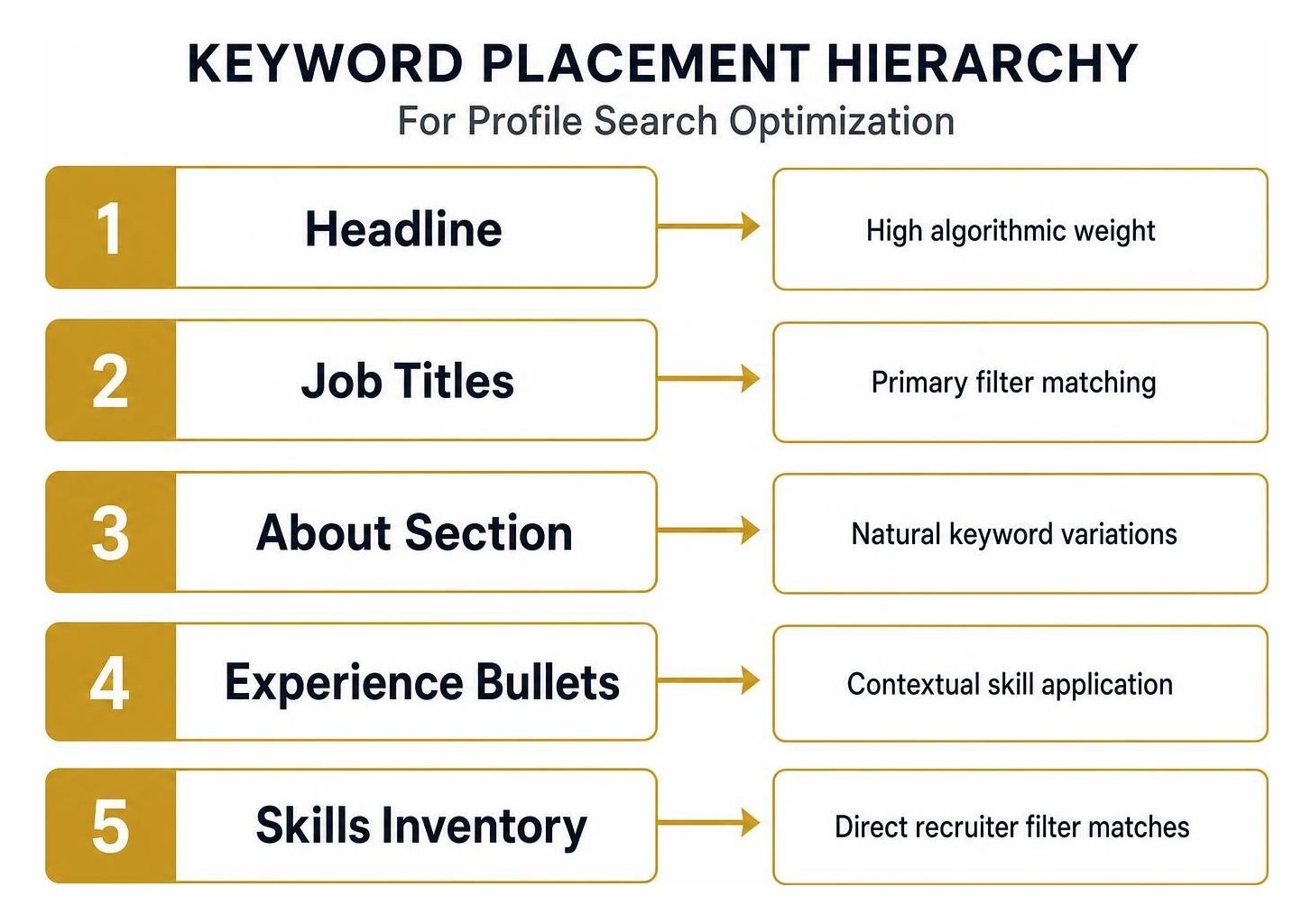
To maximize your search visibility, thoughtfully integrate results-oriented keywords and recognition terms across your summary, job descriptions, and skills list. Avoid stuffing meaningless jargon like “go-getter” or “synergistic ninja” into your copy. Instead, focus on recognized industry credentials, software platforms, and domain competencies that recruiters explicitly filter for.
Strategic Skill Management and Social Proof
- Prioritize Your Top Three Skills: You can add up to 50 skills, but your top three take center stage. Pin the three most vital proficiencies that reflect your forward-looking goals, not just your legacy tasks.
- Curate Targeted Endorsements: Reach out to colleagues, managers, and project partners to endorse your pinned proficiencies. Endorsements from individuals with verified expertise in those same areas carry greater weight.
- Secure Meaningful Recommendations: Aim for at least two detailed recommendations for every significant role. Rather than a vague “Great person to work with,” ask recommenders to speak directly to a specific project, your leadership style, or your ability to solve complex problems under pressure.
- Leverage the Featured Section: Transform your page into an interactive portfolio. Use the Featured carousel to highlight conference presentations, media appearances, published white papers, patent filings, or GitHub repositories.
Industry pioneers like data engineering leader Zach Wilson and digital marketing authority Danny Sullivan demonstrate how linking directly to open-source contributions, technical tutorials, and published articles builds unassailable authority in recruiter searches.
Active Engagement Strategies to Amplify Your LinkedIn Profile
An optimized profile acts as your landing page; active engagement is the traffic engine that brings visitors to it. Consistent activity signals to the algorithm that your profile is active, which directly boosts your placement in candidate searches.
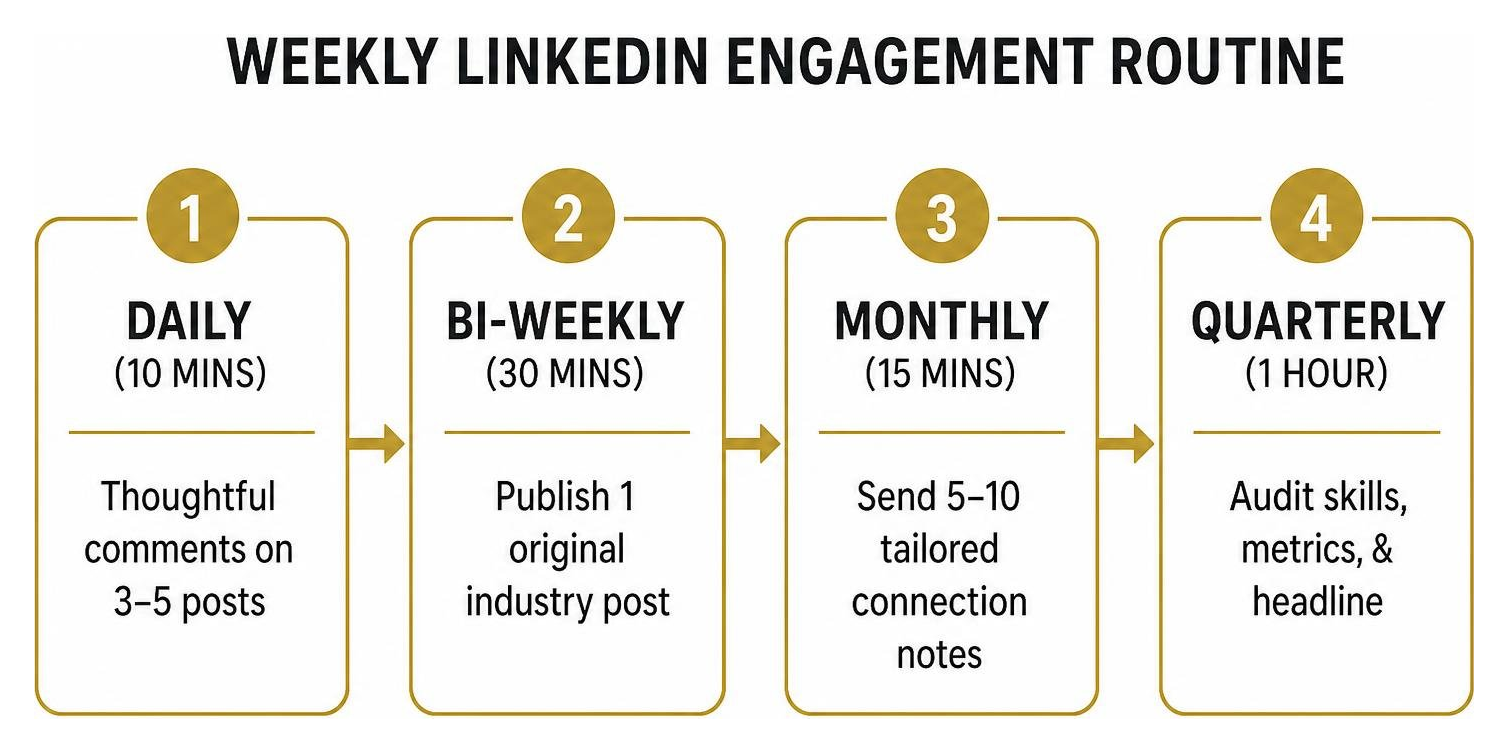
- Engage Thoughtfully: Spend 10 minutes a day leaving insightful comments on posts from peers, clients, and industry leaders. Avoid low-effort remarks like “Great share!” Add real value by sharing an operational lesson, asking a follow-up question, or offering a counter-perspective.
- Publish Original Perspectives: Share weekly or bi-weekly updates on market trends, case studies from your work (sanitized of proprietary data), or operational playbooks.
- Personalize Connection Invites: Never send blank connection requests to individuals you do not know personally. Include a warm, 2–3 sentence note explaining why you want to connect: > “Hello Sarah, I enjoyed your recent panel on AI infrastructure at the Summit. I lead cloud migrations in the enterprise space and would welcome the chance to connect and follow your work.”
- Engage with Communities and Alumni: Join industry-specific working groups and your university’s alumni networks. Alumni networks are an exceptional source of warm introductions and unadvertised executive opportunities.
Executives like sustainability strategist Manuj Khurana and analytics leader Shreya Ghelani use consistent content sharing and industry commentary to maintain continuous visibility in their sectors.
As your personal brand expands, you might also consider whether an independent site makes sense. If you are weighing how an external site pairs with your social profiles, explore whether a personal website is right for you to create a dedicated home for your speaking engagements, portfolio work, and executive bio.
Frequently Asked Questions About LinkedIn Profile Optimization
How often should I update my LinkedIn profile?
You should treat your profile as an evolving record of your career. Plan for a minor update every quarter to add newly earned certifications, update your skills inventory, and add fresh project metrics. At a minimum, conduct a comprehensive audit twice a year to ensure your headline, summary, and experience sections align with your evolving career targets.
What should I put in my experience section if I have limited work history?
Focus on demonstrating initiative, problem-solving abilities, and practical skills. Highlight intensive academic coursework, capstone projects, co-op programs, internships, volunteer leadership, and student club management. Structure each entry around the specific problem you tackled, the tools and technologies you employed, and the tangible outcome of your efforts.
How do keywords impact recruiter search visibility on LinkedIn?
Recruiters use sophisticated search filters to identify candidates across massive talent pools. If your profile lacks the exact titles, technical proficiencies, certifications, and industry terminology relevant to your target roles, you will not appear in their filtered search results. Incorporating these terms naturally across your Headline, About, Experience, and Skills sections ensures you rank higher in recruiter searches.
Conclusion
Optimizing your professional presence is not a one-time chore; it is an ongoing investment in your career equity. By establishing a professional visual presentation, articulating an outcome-driven career story, weaving in strategic industry keywords, and maintaining steady engagement, you transform your profile into an inbound opportunity magnet.
If you are ready to position your background for premier leadership roles, board appointments, or high-impact career pivots, our team can help. At MyExpertCoach, we combine more than 25 years of inside HR and recruiting experience with tailored, non-template methodologies to help senior executives showcase their true business value.
Discover how our bespoke resume and LinkedIn optimization services can clarify your executive narrative, elevate your visibility, and accelerate your next career milestone.