table of contents
How to Draft a Resume That Shows Your Value
To draft a resume, start with the job you want. Pick a clean template, then list your experience, skills, and results. Put the most relevant achievements first, and use numbers where you can prove your impact. Match the job posting’s language when it accurately describes your work. Before you apply, check every claim, proofread the document, and make sure it is easy to read.
If you are a senior leader, your resume should do more than list roles. It should show the decisions you made and the results that followed.
I’m Sandy Spencer, a career coach with more than 38 years of experience in HR and executive recruiting. I’ve helped professionals draft a resume that brings their achievements and career goals into focus.
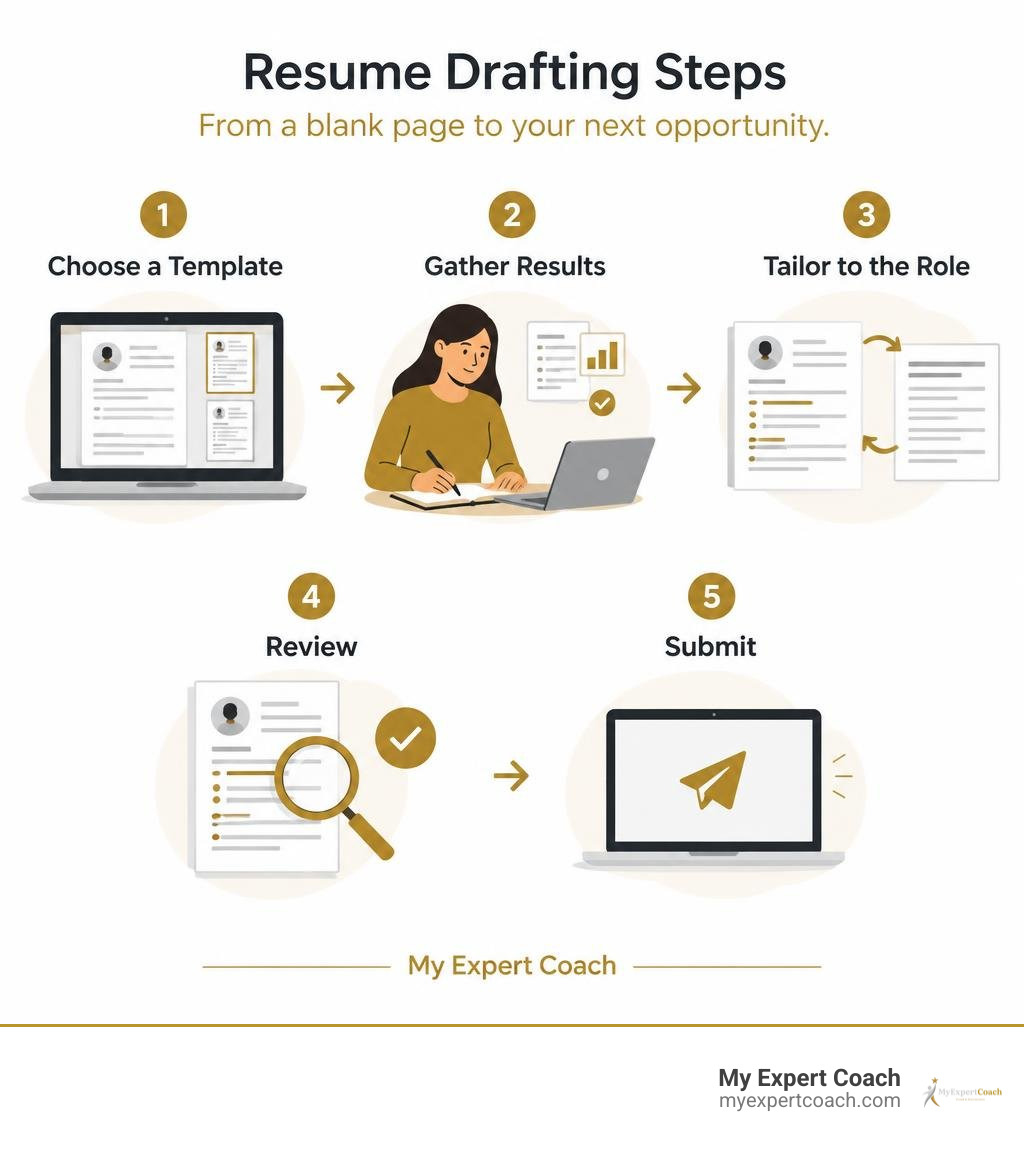
Step 1: Select the Right Template for Your Industry and Career Stage
Choosing a layout sets the structural foundation for your entire application. A common trap is picking an overly designed graphic layout filled with multiple columns, icons, and progress bars. While visually striking to the human eye, these elements can confuse hiring software and distract recruiters who want quick answers.
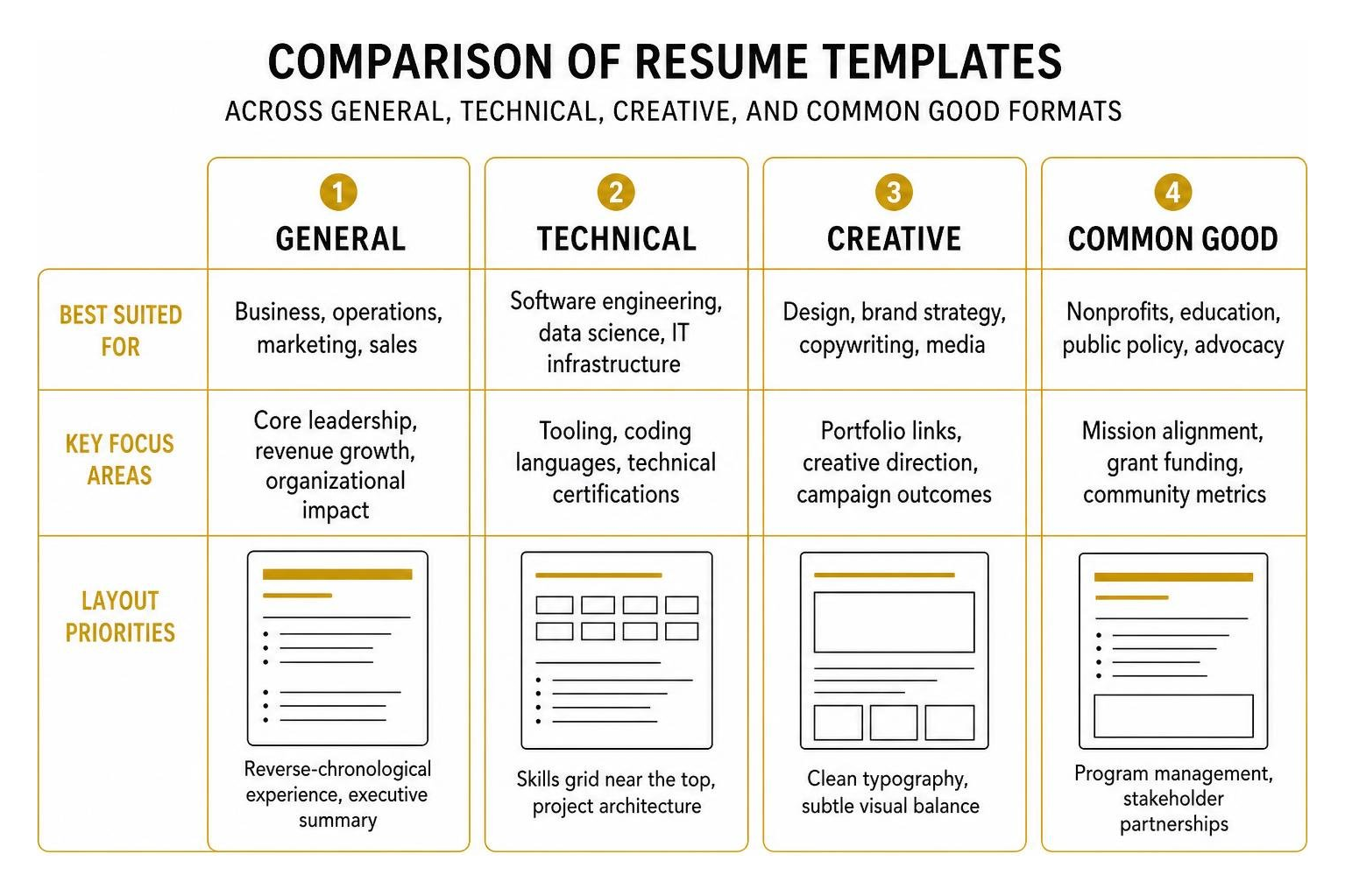
To make an informed choice, consider how different formats serve distinct career paths:
| Template Style | Best Suited For | Key Focus Areas | Layout Priorities |
|---|---|---|---|
| General | Business, operations, marketing, sales | Core leadership, revenue growth, organizational impact | Reverse-chronological experience, executive summary |
| Technical | Software engineering, data science, IT infrastructure | Tooling, coding languages, technical certifications | Skills grid near the top, project architecture |
| Creative | Design, brand strategy, copywriting, media | Portfolio links, creative direction, campaign outcomes | Clean typography, subtle visual balance |
| Common Good | Nonprofits, education, public policy, advocacy | Mission alignment, grant funding, community metrics | Program management, stakeholder partnerships |
Prestigious academic career centers, such as the Yale Office of Career Strategy, categorize resume templates into distinct formats like Technical, Creative, and Common Good to help candidates align their structural presentation with industry norms. Using a vetted, structured design ensures your document establishes a clear hierarchy of information. For higher-level corporate positions, following proven guidelines for executive resume best practices helps highlight organizational vision, board interactions, and overall operational scale.
Recent Graduates and Entry-Level Roles
If you are entering the workforce, position your education section near the top of the page. Detail relevant academic coursework, capstone projects, honors, and campus leadership. If you are pursuing specialized healthcare or technical fields, adapting your document like a tailored nursing student CV allows clinical rotations and certifications to take center stage alongside foundational classroom achievements.
Experienced Professionals and Career Changers
For established professionals, place your professional experience immediately following your summary. Focus on cumulative career progression, promotion history, and quantifiable business outcomes. If you are changing sectors, an effective executive career transition strategy emphasizes cross-functional leadership, operational transformation, and problem-solving capabilities that bridge disparate industries.
Step 2: How to Draft a Resume Using AI and Modern Digital Tools
Modern productivity platforms make it simpler than ever to assemble an initial draft without staring at a blank screen for hours.

Use an AI Writing Assistant to Draft a Resume First Pass
Online tools such as the Microsoft Word online resume builder allow you to explore versatile templates and leverage Microsoft Copilot to draft or rewrite sections directly inside your document. You can feed raw career notes, past performance appraisals, or your existing LinkedIn profile into an AI assistant to generate structured bullet points in seconds.
During this initial pass, make sure to claim your accomplishments even if specific projects fell outside your formal job descriptions. Capturing your real responsibilities gives generative tools richer material to work with.
Audit and Refine AI-Generated Content
AI-generated text can often sound generic or overly inflated. Run through a rigorous editorial audit to protect your credibility:
- Verify All Facts and Metrics: Ensure every percentage, revenue figure, and team size reflects accurate historical data.
- Remove Hallucinated Details: AI tools frequently invent project scopes, technical software names, or organizational titles that you never held.
- Maintain an Active, Authentic Voice: Replace corporate buzzwords with clear, direct verbs that represent how you speak.
- Watch Out for Standard Application Errors: Reviewing typical job search mistakes will keep your application free from robotic phrasing, inconsistent dates, and generic summaries.
Step 3: Build Essential Resume Sections with High-Impact Metrics
Every standout resume must balance functional clarity with strategic positioning across five core sections:
- Contact Header: Name, phone number, professional email, city/state, and a clean link to your LinkedIn profile.
- Executive Summary: A concise 3–4 line snapshot defining your core value proposition, industry focus, and top career achievements.
- Core Competencies: A structured grid of 6–10 strategic skills aligned with your target roles. Incorporate relevant recognition and results-oriented keywords to signal immediate domain expertise.
- Professional Experience: Reverse-chronological work history detailing organizational impact, leadership scope, and concrete achievements.
- Education & Certifications: Degrees, executive education, professional licenses, and relevant accreditations.

Crafting Bullet Points with Proven Action Frameworks
Transform task-based lists into impactful accomplishment statements using the Context-Action-Result (CAR) framework:
- Context: What was the business challenge, market condition, or operational bottleneck?
- Action: What specific strategic initiative, methodology, or system did you implement?
- Result: What was the measurable business outcome (revenue generated, costs cut, time saved)?
For instance, reviewing dynamic account executive resume examples shows that top producers never just state they “managed sales calls.” Instead, they state: “Spearheaded enterprise outbound sales strategy across 14 target accounts, closing $3.2M in annual recurring revenue and exceeding annual quota by 128%.”
Step 4: Optimize and Tailor Your Resume for ATS Screening
Over 70% of mid-to-large organizations utilize Applicant Tracking Systems (ATS) to parse, filter, and rank incoming applications before a recruiter ever reviews them. To ensure your resume clears automated filters without losing visual appeal, adhere to these technical standards:
- Use Standard Section Headers: Stick to traditional titles like “Work Experience,” “Education,” and “Skills” rather than unconventional headings like “Where I’ve Been.”
- Avoid Complex Structural Elements: Eliminate text boxes, embedded graphics, tables within tables, and headers/footers containing critical contact details, as parsing algorithms frequently drop them.
- Stick to Clean Formatting: Use standard bullet points and reliable system fonts (Calibri, Arial, Georgia, or Garamond).
How to Draft a Resume Tailored to Specific Job Postings
A generic resume rarely performs well. Tailor your core draft to each target position using systematic job search strategies:
- Analyze the Job Posting: Paste the target job description into an AI assistant or text analyzer to extract repeating technical tools, leadership traits, and functional competencies.
- Mirror Industry Terminology: Integrate the employer’s exact phrases when they accurately reflect your background (e.g., “cross-functional team leadership” vs. “leading varied groups”).
- Prioritize Top Requirements: Adjust your summary and top experience bullet points to match the primary qualifications outlined in the posting.
Step 5: Formatting, Reviewing, and Submitting Your Document
Before submitting your resume, complete a thorough quality check:
- Margins and Spacing: Maintain consistent 0.5″ to 1.0″ margins and standard line spacing (1.0 to 1.15) to preserve white space.
- Document Length: Keep your document to 1 page for early-career roles, 2 pages for experienced professionals and managers, and up to 3 pages for senior executive and C-suite profiles.
- Exporting and File Formats: Save your completed document as a standard PDF to preserve layout hierarchy across all operating systems. Only submit a Microsoft Word document (.docx) if an employer’s portal explicitly mandates it.
- Staying Competitive: Implement modern job market tips such as linking your digital portfolio or LinkedIn profile directly in your contact block.
Frequently Asked Questions About Resume Drafting
What is the most effective format to draft a resume for ATS compliance?
The reverse-chronological format remains the gold standard for ATS compliance and human recruiters alike. It arranges your experience starting with your most recent role, making career progression obvious while allowing automated parsers to match your job titles with corresponding dates accurately.
How can I tailor my resume draft to a specific job description?
Review the target job description to identify essential hard skills, soft skills, and required qualifications. Seamlessly weave those exact keywords into your professional summary, core competencies grid, and bullet points wherever you have verifiable experience matching those demands.
Is it safe to use AI tools to draft a resume?
Yes, provided you treat AI as an outlining and brainstorming assistant rather than an unmonitored author. Always verify that all dates, metrics, and accomplishments reflect your actual career history, and refine the tone to match your professional voice.
Conclusion
Drafting an exceptional resume does not require endless frustration. By selecting a clean layout, structuring your career highlights through the CAR framework, optimizing for ATS parsing, and applying modern digital drafting tools, you can produce a job-winning resume that captures your true career impact.
If you want strategic, hands-on support to refine your executive narrative and accelerate your career trajectory, partner with our team for expert resume and LinkedIn services. Together, we will transform your professional achievements into a compelling career brand that commands attention.