table of contents
Build an Executive Director Resume That Shows Scale and Mission Impact

The best executive director resume examples make it easy for a board search committee to see your leadership scope in seconds. Lead with the size of the budget, team, programs, and fundraising results you managed, then prove how your work strengthened the organization.
Use this simple structure:
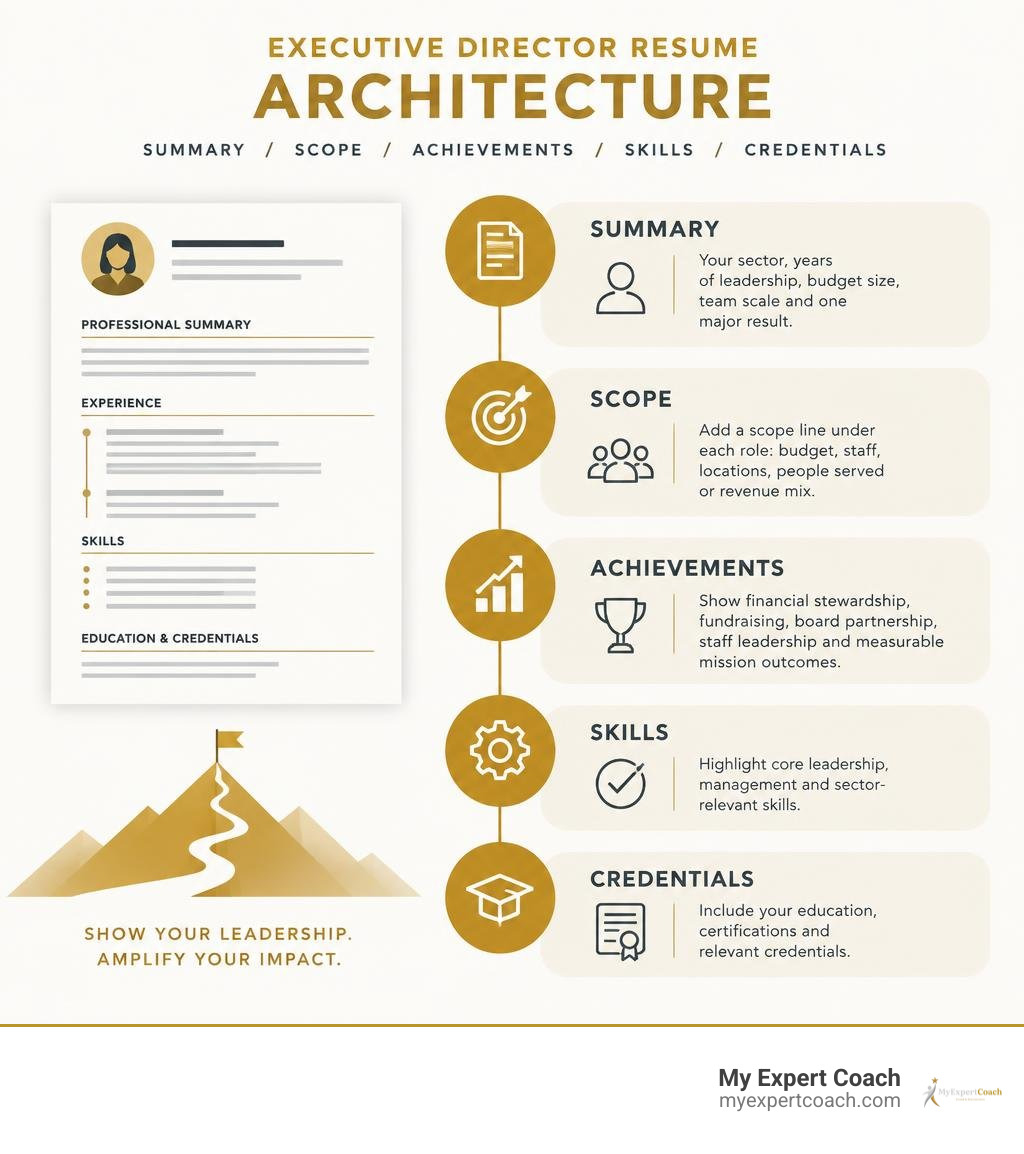
- Start with a 3-4 line leadership summary that states your sector, years of leadership, budget size, team scale, and one major result.
- Add a scope line under each leadership role, such as budget, staff, locations, people served, or revenue mix.
- Write achievement bullets that show financial stewardship, fundraising, board partnership, staff leadership, and measurable mission outcomes.
- Use a clean, single-column, reverse-chronological format with standard section headings so it works for both ATS software and volunteer trustees.
For example, a strong resume may show that a leader grew revenue, expanded services to more people, built operating reserves, or helped develop a stronger board. These details are more persuasive than broad claims such as “visionary leader” or “excellent communicator.”
I am Sandy Spencer, a career coach and executive career strategist with more than 38 years of experience in HR, executive recruiting, resume writing, and LinkedIn strategy. Having helped advance more than 10,000 careers, I know how to turn underused accomplishments into executive director resume examples that communicate leadership value clearly and credibly.
High-Impact Formatting and Core Metrics for Executive Director Resumes
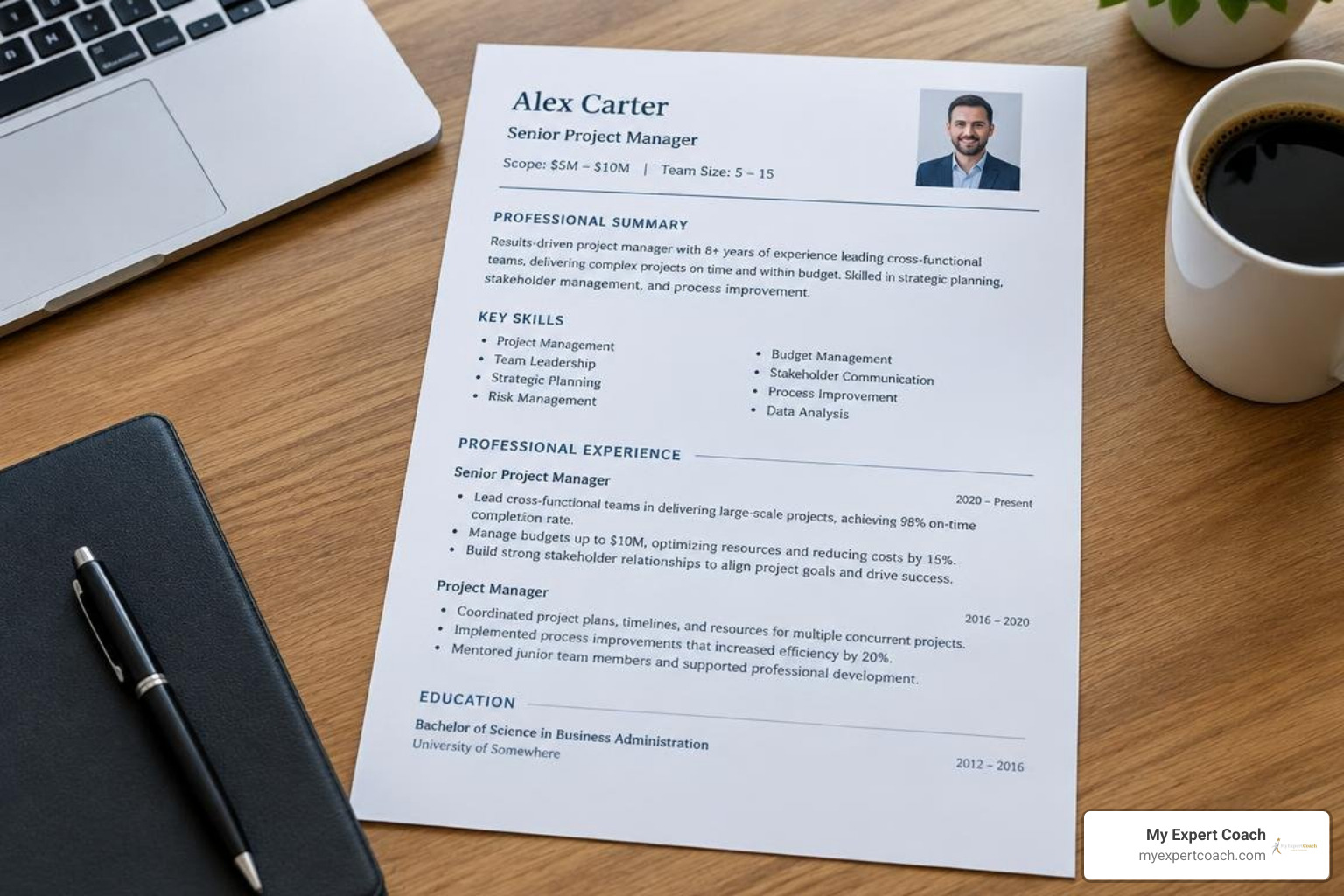
Board search committees evaluate candidates differently than standard hiring managers. In most cases, executive search committees consist of volunteer trustees—corporate executives, community leaders, and philanthropists—who review applications during personal hours. They do not want to hunt for critical data across dense paragraphs.
To capture their attention immediately while passing digital screening filters, adhere to the two-page standard. A two-page document gives you sufficient room to demonstrate strategic leadership without overwhelming busy readers.
To ensure your document performs seamlessly across both Applicant Tracking Systems (ATS) and human evaluations, follow these fundamental layout rules:
- Single-Column Architecture: Avoid multi-column layouts, sidebars, text boxes, and complex graphics. ATS parsers read left-to-right and top-to-bottom; embedded tables frequently scramble critical career milestones.
- Reverse-Chronological Ordering: Organize your professional history starting with your current or most recent executive role, tracing your leadership progression backward.
- Standard Typography: Choose clean, executive fonts such as Calibri, Arial, Helvetica, or Garamond set between 10.5 and 11.5 points. Use clear headings with strong visual hierarchy.
- Targeted Language: Integrate industry-standard results-oriented keywords and recognition terms that signal fiduciary, operational, and organizational mastery.
Scope Lines and Financial Stewardship Metrics
The most decisive mistake executive candidates make is jumping straight from a job title into narrative bullets without framing their operating footprint. Search committees evaluate fit by comparing your past organizational scale against their current operational realities.
Directly below your title, organization name, and employment dates, include a dedicated Scope Line before your first achievement bullet:
Scope Line Example:
Operating Budget: $8.5M | Direct/Indirect Reports: 48 FTEs | Footprint: 4 Regional Facilities | Community Reach: 35,000 Annual Beneficiaries | Revenue Mix: 45% Philanthropy, 35% Public Grants, 20% Earned Income
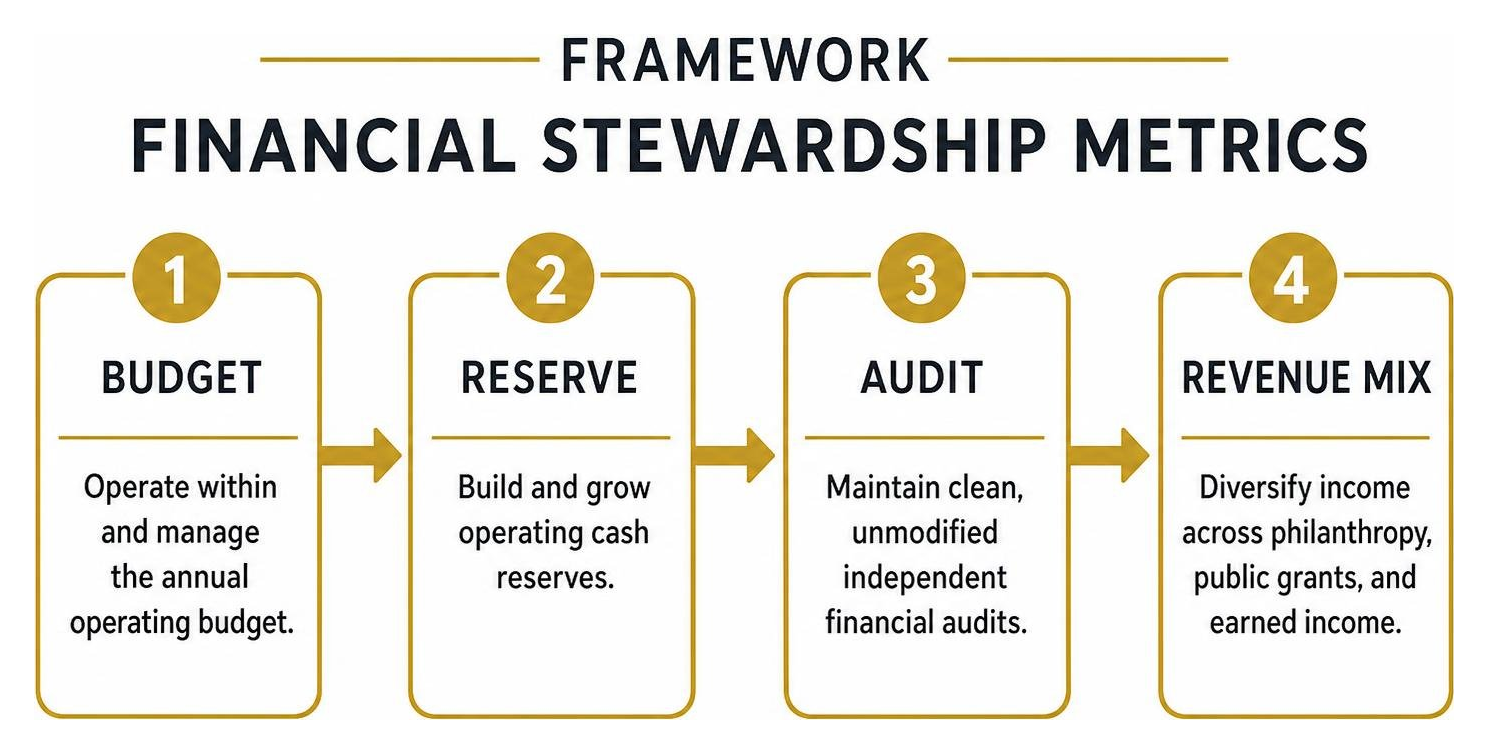
Search committees evaluate several critical financial stewardship metrics:
- Operating Reserve Growth: Quantify how many months of cash reserves you generated (e.g., “Expanded cash operating reserves from 3 weeks to 5.5 months over a 36-month period”).
- Deficit Elimination: Detail how structural shortfalls were corrected through cost controls, indirect cost rate renegotiations, or diversified income streams.
- Audit Outcomes: Note clean, unmodified audit records to validate your compliance oversight (e.g., “Maintained 6 consecutive years of clean, unmodified independent financial audits”).
- Revenue Diversification: Highlight shifts away from volatile single-source funding toward sustainable combinations of individual major gifts, corporate sponsorships, government allocations, and fee-for-service models.
Structuring Board Governance and Strategic Leadership
Executive Directors report directly to a governing Board of Directors. Effective resumes demonstrate governance partnership rather than passive compliance. Instead of writing “Attended quarterly board meetings,” articulate how you collaborated with trustees to drive organizational vision, capital campaigns, and risk management.
Emphasize your role in:
- Recruiting diverse trustee talent to address committee skill gaps.
- Cultivating board engagement to reach 100% individual giving participation.
- Guiding board committees through strategic planning cycles, executive transitions, and policy modernizations.
When dealing with complex governance challenges, investing in targeted executive leadership coaching helps leaders articulate their experience leading through organizational turnarounds, staff retention initiatives, and crisis scenarios calmly and authoritatively.
Annotated Executive Director Resume Examples for Different Leadership Stages
The expectations for an executive director vary dramatically based on the organization’s size, life cycle stage, and candidate background. Executive director compensation ranges widely—from $75,000 to $120,000 in emerging nonprofits to $200,000 to $300,000+ in large regional or national institutions. Tailor your resume focus according to your career stage:
| Leadership Stage | Primary Strategic Focus | Critical Metrics to Spotlight | Board Selection Priority |
|---|---|---|---|
| Emerging / First-Time ED | Program execution, donor acquisition, operational systems | Budget managed, grant capture rates, staff retention | Operational agility, fundraising promise |
| Mid-Career ED (Growth) | Multi-site expansion, strategic planning, team building | Revenue growth %, program scaling (e.g., 3x reach), board recruitment | Strategic execution, fundraising track record |
| Senior Chief Executive | Fiduciary turnaround, endowment building, cross-sector advocacy | Multi-million dollar P&L ($10M+), capital campaigns, legislative policy | Enterprise risk management, community influence |
Candidates navigating a sector pivot should rely on an executive career transition strategy that aligns their leadership assets with governance expectations.
Executive Director Resume Examples for Nonprofit and Community Leaders
Boards favor quantifiable balance sheets and verified mission metrics over generic mission statements. Strong nonprofit executive director resume examples lead with operating budget scale, multi-site administration, major gift results, and program expansion data.
Corporate-to-Nonprofit Executive Director Resume Examples and Transitions
Corporate executives transitioning into executive director positions must translate commercial business terminology into mission-aligned governance concepts:
- P&L Management $\rightarrow$ Comprehensive Budgetary Stewardship & Operating Reserves
- Sales / Business Development $\rightarrow$ Institutional Advancement, Earned Income & Philanthropy
- Mergers & Acquisitions $\rightarrow$ Strategic Alliances, Program Mergers & Public-Private Partnerships
- Customer Success $\rightarrow$ Community Stakeholder Engagement & Client Outcomes
Essential Skills, Certifications, and ATS Optimization Strategies
ATS software scans executive resumes for exact operational phrasing before routing documents to search committees. Candidates often rely too heavily on broad soft skills—such as “visionary thinker”—rather than concrete competencies.
Group your executive competencies into clear sub-categories:
Hard Skills & Core Governance Competencies
- Fiduciary & Operations: Financial Modeling, Capital Budgeting, Operating Reserves, 501(c)(3) Compliance, Enterprise Risk Management, Labor Relations, Indirect Cost Rates.
- Advancement & PR: Major Gifts Cultivation ($100K–$1M+), Capital Campaigns, Grant Writing & Federal Grants, Planned Giving, Corporate Sponsorships, Media Relations, Public Advocacy.
- Governance & Strategy: Board Recruitment & Committee Structuring, Strategic Plan Execution, Cross-Sector Coalitions, Program Evaluation & Impact Metrics.
Credentials That Validate Executive Readiness
- CFRE (Certified Fund Raising Executive): Demonstrates proven mastery of ethical philanthropic cultivation and major gift strategy.
- CNP (Certified Nonprofit Professional): Signifies specialized management credentialing in non-profit operations and governance.
- BoardSource Certificate in Nonprofit Board Consulting: Proves deep literacy in governance mechanics, board-staff dynamics, and fiduciary policy.
- Advanced Degrees: Master of Public Administration (MPA), Master of Business Administration (MBA), or Master of Nonprofit Management (MNM).
Step-by-Step Guide to Transforming Experience Bullets into Boardroom Assets
Weak executive resumes list routine duties; exceptional resumes demonstrate leadership transformation using the Context $\rightarrow$ Action $\rightarrow$ Result (CAR) formula.
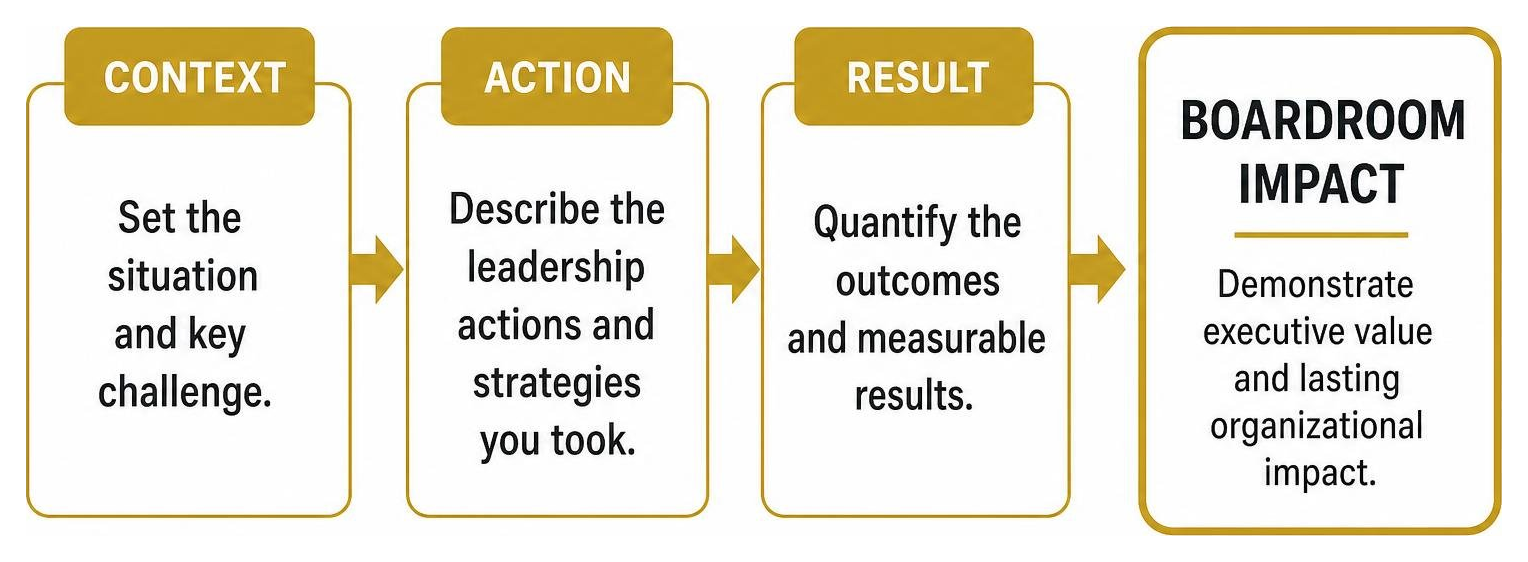
Before-and-After Bullet Transformations
1. Fundraising and Capital Strategy
- Before: Responsible for running our annual fundraising drive and contacting local donors.
- After: Reengineered annual fundraising strategy to secure $1.4M (a 38% YoY increase), expanding major donor retention from 58% to 82% through structured stewardship cycles.
2. Fiscal Oversight & Budget Discipline
- Before: Managed the organization’s budget and worked closely with our outside accountants.
- After: Administered $6.2M operating budget, renegotiated indirect vendor contracts to save $140K annually, and built cash reserves from 1 month to 4 months within 2 fiscal years.
3. Board Governance
- Before: Attended board meetings and provided quarterly updates to the trustees.
- After: Partnered with the Board of Directors to launch a formal trustee development matrix, recruiting 5 industry leaders in law, finance, and marketing to close critical committee oversight gaps.
4. Program Reach & Mission Results
- Before: Oversaw food pantry programs and community distribution networks.
- After: Scaled regional food distribution infrastructure across 3 satellite sites, expanding meal delivery volume by 200% (serving 45,000 residents annually) at an 18% lower cost per meal.
To see how seasoned professionals translate multifaceted executive capabilities into winning career narratives, read how executive candidate Michael Proffer navigated leadership placement during an executive search cycle.
Frequently Asked Questions About Executive Director Resumes
What is the ideal length and format for an executive director resume?
The ideal length for an executive director resume is exactly two pages. One page rarely offers enough space to capture complex governance, fundraising, and fiduciary achievements, while three or more pages can frustrate volunteer board members reading through dozens of applications. Use a standard single-column reverse-chronological format saved as an ATS-compatible PDF (unless the application explicitly asks for MS Word).
How do search committees evaluate candidates without previous executive director titles?
Search committees look closely at Deputy Directors, Chief Operating Officers, and senior department leaders who manage significant operational scale. Highlight your transferable duties—such as managing departmental budgets, writing major grants, leading strategic initiatives, and presenting to board committees. For additional transition strategies, explore the art of securing your dream job with Sandy Spencer.
How should an executive director present career gaps or departures following board conflict?
Keep resume descriptions focused entirely on the accomplishments you achieved during your tenure. When speaking to search committees, maintain a neutral, professional explanation:
“The organization reached a strategic inflection point where the board’s long-term vision shifted toward a different operational model, and we mutually decided it was the natural time for a leadership transition.”
Always ensure your financial, operational, and audit outcomes are fully documented so your record of performance speaks for itself.
Conclusion
Your executive resume serves as your primary boardroom calling card. By leading with your operational scope, highlighting measurable financial stewardship, and demonstrating collaborative board leadership, you immediately set yourself apart from candidates who rely on generic administrative bullet points.
At MyExpertCoach, our team brings more than 25 years of insider HR and executive recruiting experience to senior leaders across sectors. Having guided more than 10,000 careers forward, we create fully customized, non-template executive materials tailored to today’s governance landscape.
Ready to position your leadership for your next appointment? Explore our comprehensive executive resume and LinkedIn optimization services and partner with our team to secure your next executive leadership role.