
table of contents
How Much Salary Should You Ask for in a New Job?

Start with the market rate for the new role, not a fixed percentage above your current pay. When evaluating how much you should ask for in salary for a new job, compare salaries for the same job level, location, and scope. Set a target you can support with your results, plus a minimum you would accept. If the first offer is below your target, a counteroffer of 5% to 15% above the offer is a useful starting point, but let the market data guide the actual dollar amount.
For a senior role, compare the full package, including bonus, equity, benefits, and any pay you would give up by leaving. In 2026, a posted salary range can help you frame your ask, but it does not tell you where your experience fits within that range. You will usually have the clearest picture after you receive an offer and before you accept it.
I’m Sandy Spencer, a career coach at My Expert Coach with more than 38 years of experience in HR and executive recruiting. I help leaders determine how much to ask for in salary at a new job, turning that target into an actionable number backed by market data and the value they bring; here’s how to work out your figure.
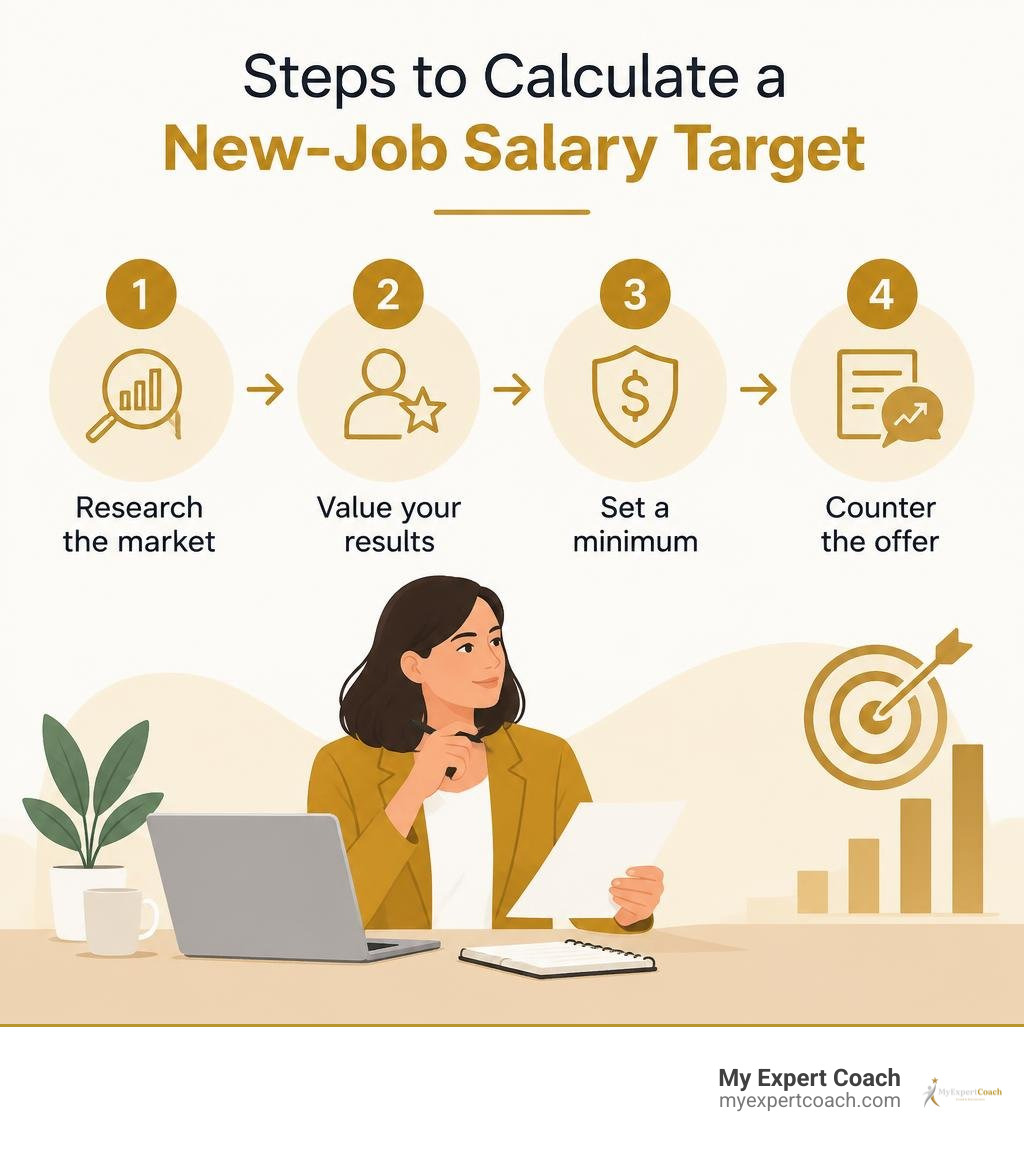
Establishing Your True Market Value and Salary Baseline
Determining what to ask for begins long before you counter an offer letter. Too many professionals rely on guesswork or tie their expectations strictly to their previous paycheck. That approach ignores a fundamental truth of the 2026 labor market: your value is defined by the open market and the specific problem you solve for the hiring company, not your past earnings.

To establish an accurate baseline, look at multiple third-party compensation sources rather than relying on a single data point. Cross-reference wage data from the Bureau of Labor Statistics (BLS) alongside verified compensation databases. That salary history bans now legally prohibit employers from asking about your previous compensation in numerous jurisdictions, including California, New York, Illinois, Colorado, and Massachusetts. This legal shift puts the responsibility on you to define your worth based on competitive benchmarks.
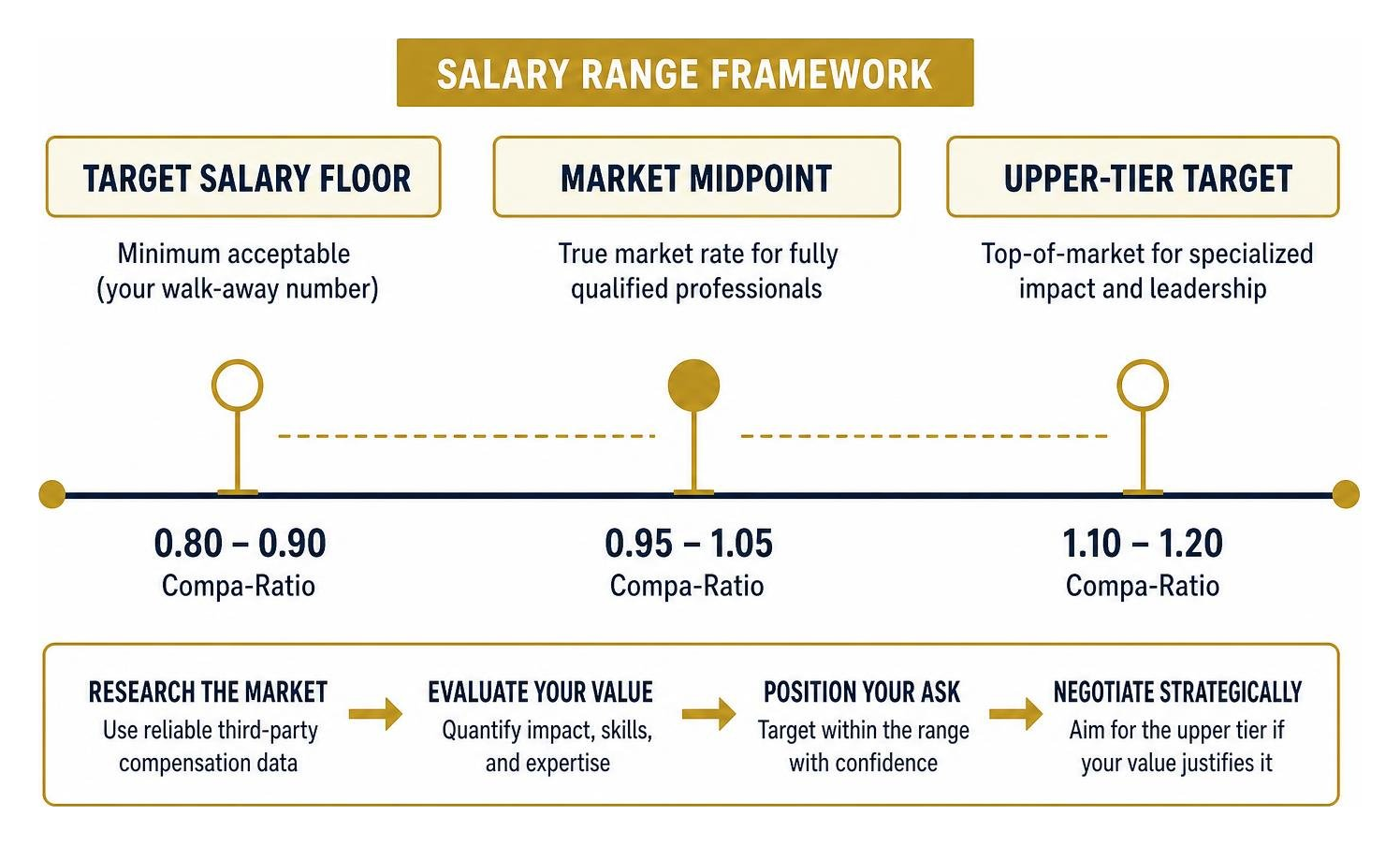
Understanding modern compensation mechanics also means understanding compa-ratios and salary bands. Organizations typically build pay structures around a midpoint:
- 0.80–0.90 Compa-Ratio: Entry-level or developing proficiency within the specific role band.
- 0.95–1.05 Compa-Ratio: The true market midpoint, intended for fully qualified hires who meet all core requirements.
- 1.10–1.20 Compa-Ratio: Top-of-market pay reserved for candidates bringing specialized expertise, leadership capabilities, or immediate revenue-driving potential.
When reading posted salary bands in job listings, do not assume the maximum posted figure is out of reach, nor should you assume the bottom figure represents a fair baseline. In addition, remember to account for cost-of-living differences and geographic tier differentials, especially if you are transitioning between regional hubs or evaluating remote roles. Understanding these structural fundamentals is one of the most reliable tips for staying competitive in today’s job market.
Evaluating Experience, Niche Skills, and Value Quantifiers
Your market rate is not an abstract concept—it reflects the return on investment you deliver. When preparing your ask, conduct an audit of your career accomplishments, translating responsibilities into measurable business impact.
Ask yourself:
- Did you increase department revenue, shorten sales cycles, or optimize operational budgets?
- Do you possess rare, in-demand technical expertise or proprietary systems knowledge that reduces onboarding time?
- Can you manage cross-functional teams through complex organizational changes?
Quantifying these achievements gives you the leverage needed to justify positioning yourself in the upper quartile of a salary band. When you articulate your track record clearly during interviews, you set up your compensation rationale. For a deeper look at framing your wins during discussions, explore our recommended strategies for addressing behavioral interview questions.
Calculating the Market Gap and Walk-Away Number
Before entering any compensation dialogue, establish two numbers: your target figure (where you aim to land based on market data) and your walk-away number (the absolute floor below which you will decline the position).
Many professionals find themselves underpaid in their current roles due to years of standard 3.5% to 4.5% annual merit increases. If you discover a significant difference between your current compensation and current industry rates, you should not be limited by your starting point. When switching employers, calculate your target to close that entire market gap rather than settling for an arbitrary percentage bump. For additional perspective on evaluating standard compensation math, review How much should you ask for in a raise? The math and benchmarks for 2026.
How Much Should I Ask for Salary New Job: The Core Calculation Framework
When transitioning to a new employer, standard market movement typically warrants an increase of 10% to 20% over your previous base salary. If you were historically underpaid relative to current market medians, closing that gap can warrant an increase of 25% to 30%. Once a written offer is extended, a counteroffer aiming 5% to 15% above their opening proposal is standard practice.
| Candidate Scenario | Recommended Ask Above Current Base / Offer | Strategic Rationale |
|---|---|---|
| Standard Lateral Move | 10% – 15% above current base | Accounts for transition risk, benefit resets, and general market adjustments. |
| Promotion / Expanded Scope | 15% – 25% above current base | Aligns with increased managerial scope, budget oversight, or strategic duties. |
| Closing a Documented Market Gap | 20% – 30%+ above current base | Re-anchors compensation to market medians when historical pay lagged industry rates. |
| Countering an Initial Offer | 5% – 15% above initial offer | Leverages the employer’s intent while remaining within standard band approvals. |
| Competing Offer Leverage | Match or +5% – 10% over higher offer | Uses validated third-party market value to secure top-tier internal band placement. |
Research shows that 73% of employers expect candidates to negotiate, yet a surprising 58% of professionals accept the first offer without countering. Over a 30-year career, failing to negotiate starting compensation can cost roughly $600,000 in lost earnings and compounding wage growth. To understand how anchoring influences these calculations, consult How Much to Ask For in a Salary Negotiation (2026).
Initial Screening Stage: How Much Should I Ask for Salary New Job When Recruiter Asks First?
Recruiters frequently ask about salary expectations during the very first screening call. Their objective is practical: they want to confirm budget alignment before committing interview resources. However, naming an arbitrary number too early can lock you into a lower band before you fully grasp the role’s scope.
When asked early in the process, use tactical deflection to keep the focus on the company’s approved budget:
“I want to ensure we are aligned on expectations before diving deep into the interview process. Could you share the budgeted salary range for this position?”
If the recruiter insists on hearing your target first, provide a well-researched, narrow range ($10,000 to $15,000 wide) anchored by your target floor:
“Based on the market data for this role’s scope and responsibilities in our market, I am targeting a base salary between $130,000 and $145,000, depending on the complete compensation and benefits package.”
For detailed guidance on handling early screening questions without underselling your background, see How to answer ‘What are your salary expectations?’.
Counteroffer Math: How Much Should I Ask for Salary New Job Above the Initial Baseline?
When you receive an initial offer, hiring managers rarely present their absolute ceiling on the first pass. Most opening offers sit between the 25th and 50th percentiles of the role’s budgeted band.
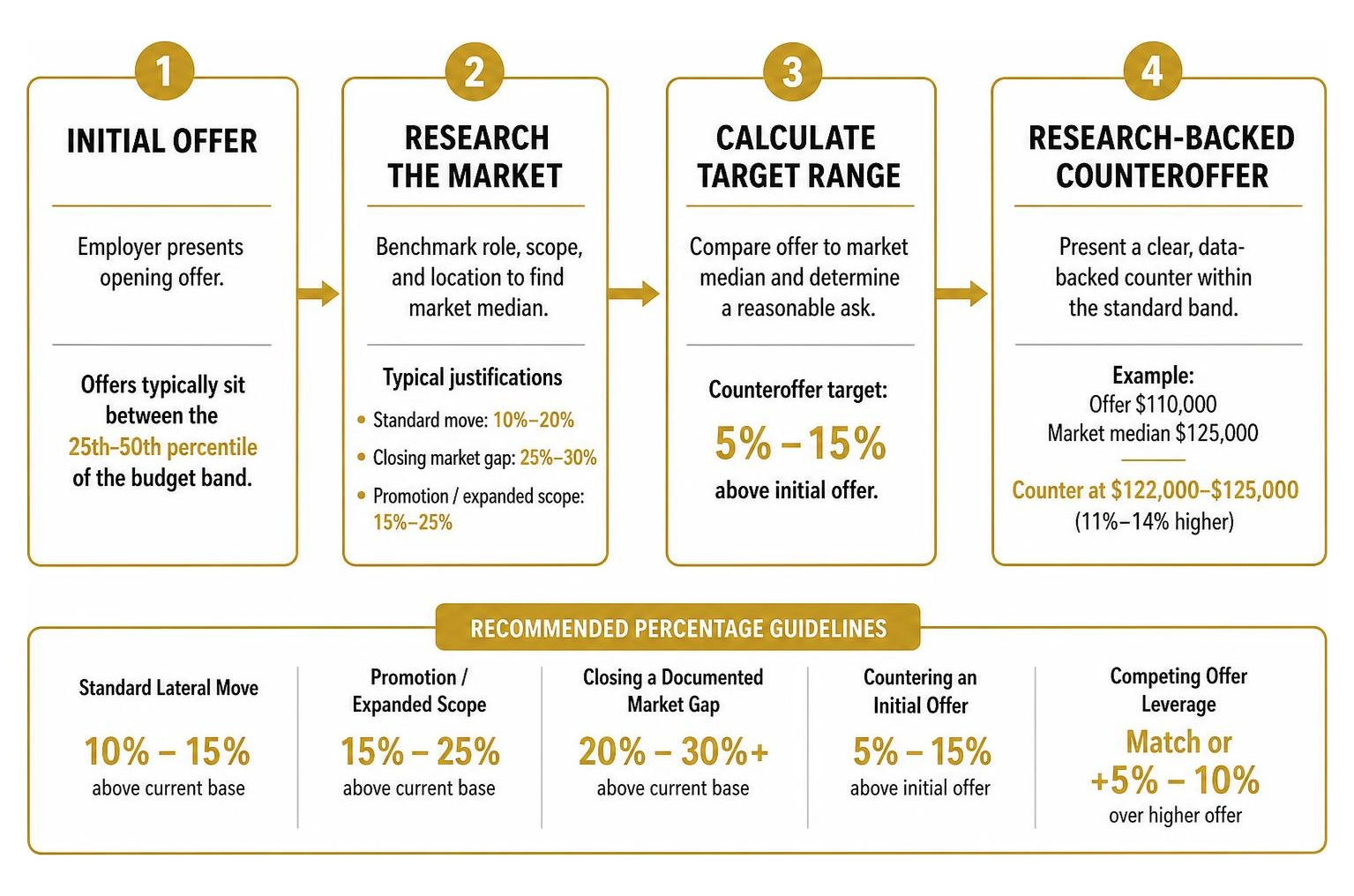
If an offer comes in at $110,000 and your market research supports a median of $125,000, countering at $122,000 to $125,000 (roughly 11% to 14% higher) is reasonable and within standard budget tolerances. Avoid the temptation to name an inflated number with the idea of meeting in the middle; anchor your counter with verifiable market metrics. Failing to back your request with data is one of the classic 13 big mistakes job seekers make.
Navigating the Negotiation Window and High-Leverage Moments
Your negotiating leverage follows a distinct timeline during the hiring cycle. It begins at zero when submitting an application, rises steadily as you advance through interviews, and reaches its absolute peak the moment the employer extends a formal written offer.

At that precise moment, the hiring team has decided you are their top choice. They have invested weeks of screening time, evaluated alternatives, and pictured you in the role.
Do not accept an offer on the spot when delivered verbally over the phone. Express genuine enthusiasm, ask for the full compensation details in writing, and request a few days to review the package.
Verbal acceptances can limit your ability to negotiate later. If you find yourself needing to re-open discussions after a premature agreement, review our guide on Negotiating After Offer Acceptance: Risks, Rewards, and Exact Scripts.
Handling Competing Offers vs. Negotiating with Zero Leverage
Holding multiple job offers provides clear, objective leverage. If Company A offers $120,000 while Company B offers $135,000, you can transparently invite Company A to match or exceed the higher offer if they are your preferred employer:
“I remain very excited about the vision at Company A and would love to join the team. I have received a competing offer at $135,000 base. If you can match that figure, I am prepared to sign immediately.”
If you do not hold a competing offer, never fabricate one. Dishonesty during offer negotiations can damage professional trust and easily backfire if an employer calls your bluff. Instead, rely on market research, documented achievements, and clear value drivers. You can also explore our guidance on how to secure better pay without falling into the dangerous counteroffer trap to protect your professional relationships.
Delivering the Counter via Phone or Email Communication
Whether you deliver your counteroffer over a scheduled phone call or via a structured email depends on your communication style and your relationship with the hiring team. Written proposals allow you to present a clear, organized rationale without interruption.
When delivering your counter in writing, keep it concise, appreciative, and centered on business value. If you need support organizing your outreach, our walkthrough on how to use e-mail to follow up on job contacts provides foundational structure.
Here is a practical email script to guide your counter:
Subject: Jordan Taylor – Offer Discussion – Senior Director of Product
Dear Sarah,
Thank you very much for extending the offer to join Acme Corporation as Senior Director of Product. I am enthusiastic about the opportunity to lead the platform modernization initiative and contribute to the team’s upcoming milestones.
After reviewing the total compensation details and comparing them against current industry benchmarks for the scope of this role, I would like to discuss adjusting the base salary. Based on my track record in scaling enterprise accounts and modernizing legacy infrastructure, I am requesting a starting base salary of $145,000.
If we can reach agreement on this figure, I am eager to accept the offer and begin onboarding. Thank you again for your partnership throughout this process, and I look forward to your thoughts.
Best regards,
Jordan Taylor
Expanding Beyond Base Salary: Total Compensation Levers
Base salary is only one component of your overall financial return. If an organization faces strict base salary caps due to internal pay equity or departmental budget limits, you can often negotiate other valuable elements of the package.
| Compensation Lever | Negotiation Flexibility | Strategic Value & Considerations |
|---|---|---|
| Signing Bonus | High (one-time budget) | Bridges year-one cash gaps without affecting ongoing internal base equity bands. |
| Equity / Stock Grants | Medium to High | Aligns long-term upside with company valuation growth; pay close attention to vesting schedules. |
| Annual Performance Bonus | Moderate (often formulaic) | Clarify target metrics, historical payout percentages, and whether year-one bonuses are prorated. |
| Additional Paid Time Off (PTO) | Moderate | Directly increases hourly compensation value while supporting long-term work-life balance. |
| Remote Flexibility / Commute Stipends | High | Reduces commuting expenses, transit time, and personal relocation overhead. |
| Executive Development / Tuition | High | Non-taxable professional development allocations that build future earning potential. |
When evaluating complex compensation packages, understanding transparency trends can help you identify flexible budget pools. Review Salary Negotiation in 2026: Pay Transparency Guide for deeper context on how modern pay bands are structured.
What to Do When the Employer States Salary Is Firm
When a hiring manager tells you the base salary is strictly capped, accept the statement gracefully without abandoning the negotiation altogether. This is the moment to turn to secondary levers:
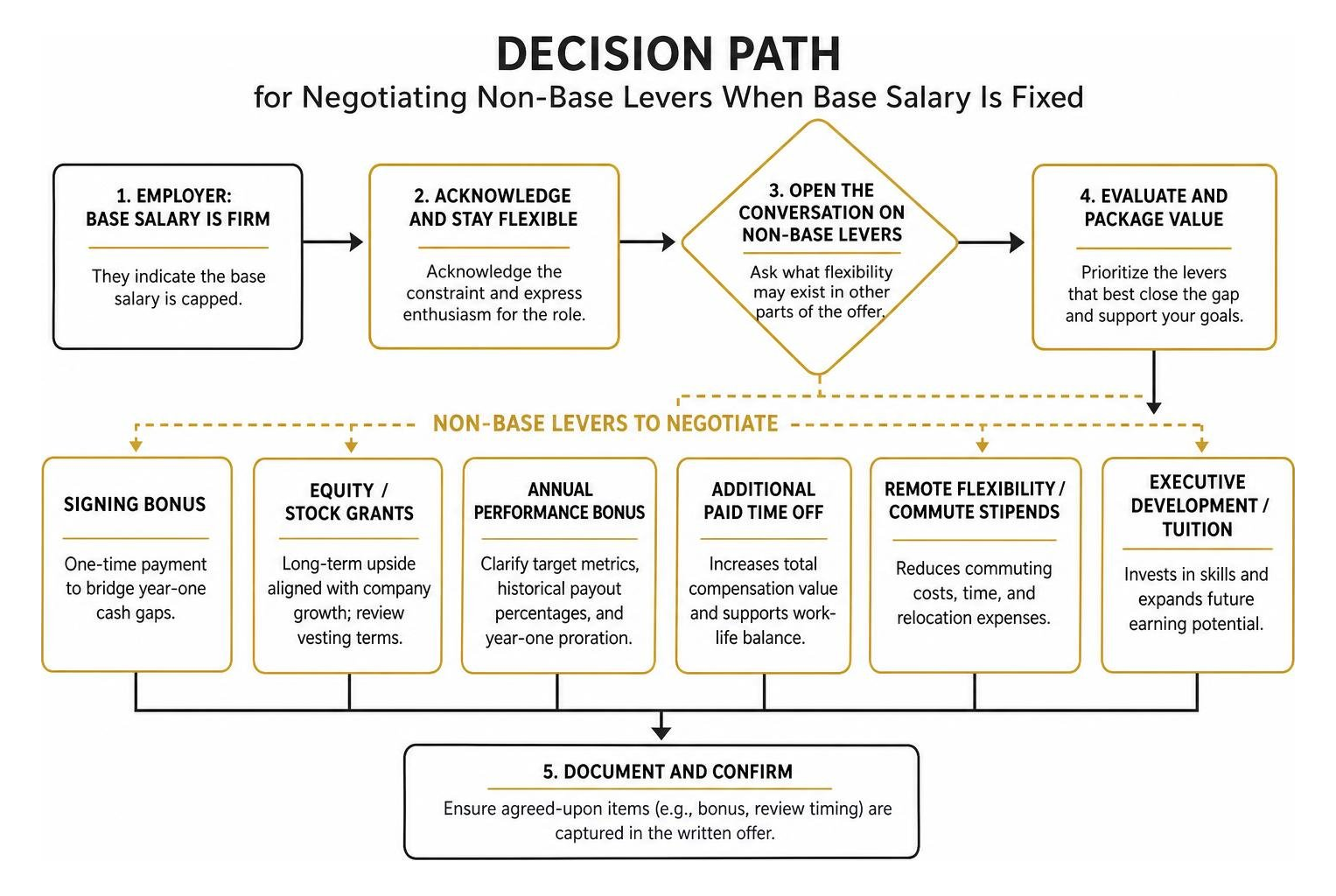
You can respond with a constructive alternative:
“I understand that the base salary for this band is capped at $115,000. In light of that constraint, would you be open to a $10,000 signing bonus to help close the gap for year one? Alternatively, I would welcome including a written six-month performance review to re-evaluate base compensation once initial milestones are met.”
Securing an early review clause in your written offer letter is an effective, underused strategy for accelerating your earning trajectory. For strategic guidance on navigating offer discussions, explore the art of securing your dream job with Sandy Spencer.
Critical Salary Negotiation Mistakes to Avoid
Negotiating compensation requires balancing confident advocacy with professional diplomacy. Avoiding a few common missteps will keep discussions productive and collaborative.
Keep these key practices in mind during negotiations:
- Avoid Apologetic Language: Phrasing your ask with qualifiers like “I’m sorry to ask, but…” or “I hate to be difficult…” undermines your market value. State your figures calmly, professionally, and clearly.
- Anchor to a Specific Dollar Figure: When countering, name a single, precise figure rather than a wide range. Employers naturally focus on the lowest number in any range you provide.
- Keep the Rationale Focused on Market Value: Frame your counter around market benchmarks, role scope, and business outcomes—not personal financial obligations such as mortgages, car payments, or personal debt.
- Maintain Professional Confidence: Imposter syndrome can lead candidates to settle prematurely. If you find self-doubt creeping into your preparation, review our strategies on how to beat the negative thoughts ruining your job search.
- Keep Negotiations to One or Two Thoughtful Rounds: Present your full compensation feedback together rather than making sequential, piecemeal requests that can frustrate the hiring team.
Frequently Asked Questions About Setting Your Starting Salary Target
Can negotiating a starting salary cause an employer to rescind an offer?
Having an offer rescinded simply for making a polite, data-backed counteroffer is rare. Up to 73% of employers expect some degree of negotiation, and 85% of candidates who negotiate receive at least part of what they requested.
An offer is typically only at risk if a candidate issues aggressive ultimatums, acts unprofessionally, or misrepresents facts. A respectful, market-grounded counter is standard business practice.
Should I give a salary range or a specific dollar figure?
During early phone screenings, providing a narrow range ($10,000 to $15,000 wide) gives you flexibility while confirming broad alignment. However, when presenting a formal counteroffer after receiving a written proposal, name a specific dollar figure.
Psychological research shows that precise numbers signal thorough market research and preparation, whereas ranges are almost always interpreted by hiring teams as acceptance of the lower number.
How do pay transparency laws change how much I should ask for?
Pay transparency laws provide clear visibility into an employer’s budgeted salary bands before you interview. Instead of guessing a range, use the posted band to guide your ask.
Treat the midpoint as the expected baseline for an experienced professional meeting all standard qualifications. If your background includes niche technical skills, leadership experience, or measurable revenue impact, target your ask between the 60th and 85th percentiles of the posted range.
Conclusion
Negotiating your starting salary sets the foundation for your long-term earning potential. Every future raise, bonus, and retirement contribution builds directly on the baseline you establish today. Approaching offer discussions with verified market data, quantified achievements, and a clear understanding of compensation bands allows you to advocate for yourself confidently and professionally.
At MyExpertCoach, we provide 25+ years of insider HR and executive recruiting expertise to help senior leaders and rising professionals navigate career transitions. If you want hands-on support defining your market value, crafting counteroffer scripts, and evaluating total compensation packages, partner with our team through our executive coaching and compensation negotiation services.