table of contents
Core Resume Formats and Essential Structural Elements
Mastering resume writing involves four core steps: selecting a clean structure (typically reverse-chronological), organizing your career into five essential sections, crafting metric-driven bullet points using strong action verbs, and tailoring your keywords to the target job description to clear Applicant Tracking Systems (ATS). Rather than an exhaustive autobiography, an effective resume is a targeted marketing document engineered to capture recruiter interest within a 20-second scan while moving cleanly through automated filters.
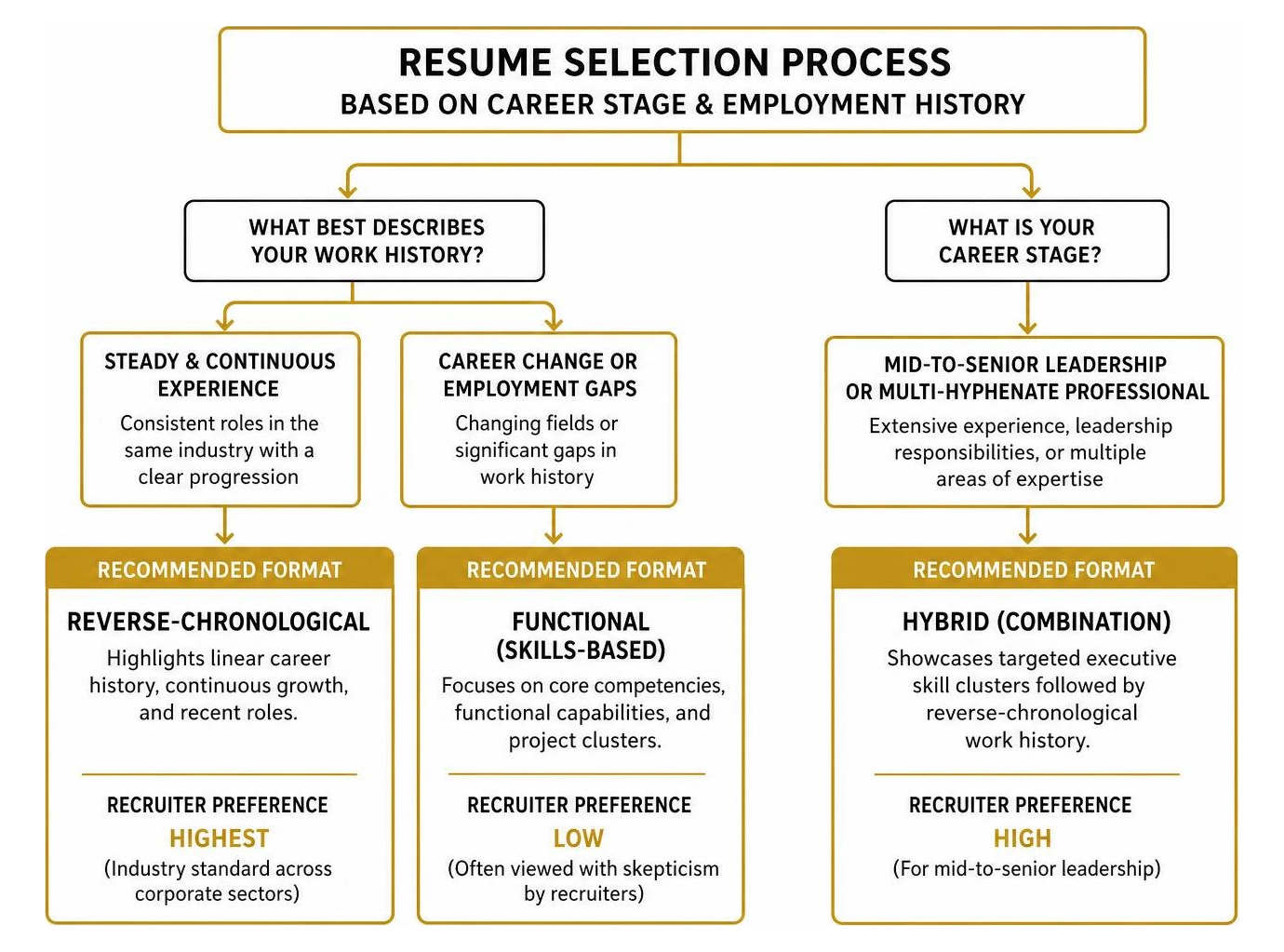
Hiring managers, recruiters, and ATS platforms evaluate your career progression through specific structural frameworks. The table below outlines how the three primary resume formats compare:
| Resume Format | Primary Focus | Best Suited For | Recruiter Preference Level |
|---|---|---|---|
| Reverse-Chronological | Linear career history, continuous growth, and recent roles | Professionals with steady experience in the same industry | Highest (Industry standard across corporate sectors) |
| Functional (Skills-Based) | Core competencies, functional capabilities, and project clusters | Career changers or professionals with significant employment gaps | Low (Often viewed with skepticism by recruiters) |
| Hybrid (Combination) | Targeted executive skill clusters followed by reverse-chronological work history | Senior leaders, multi-hyphenate professionals, and executives | High for mid-to-senior leadership |
The reverse-chronological resume remains the gold standard preferred by most employers. As outlined in the comprehensive FSU Career Center Guide on Writing a Resume, presenting your positions in reverse chronological order provides a transparent, easy-to-read narrative of your professional trajectory.
Essential Sections Every Resume Must Include
Regardless of formatting variations, every competitive resume must contain five core sections:
- Header & Contact Information: Your full name (in a prominent 14–16 pt font), city and state, phone number, professional email address, and a customized LinkedIn profile link. Never include your full street address or sensitive personal identifiers.
- Professional Summary: A high-impact, 2-to-3 sentence value proposition that outlines your professional identity, core domain expertise, and signature business contributions.
- Core Competencies & Skills: A curated list of 8 to 12 relevant hard skills, technical competencies, and domain keywords aligned with your target job description.
- Professional Experience: A reverse-chronological record of your work history. Each role should state the job title, employer, location, and dates of employment (month and year), followed by 3 to 6 achievement-oriented bullet points.
- Education & Credentials: Degrees earned, granting institutions, graduation years, and relevant continuing education.
Optional sections—such as board appointments, industry certifications, publications, patents, or language proficiencies—can be included when they directly reinforce your qualification for the target position.
Resume Writing for Different Career Stages
Your career depth determines the scope, layout, and page budget of your document:
- Early Career (0–3 Years): Undergraduates and recent graduates rarely need more than a single page to convey their value. Focus on relevant coursework, internships, leadership roles, and academic projects, keeping your narrative concise.
- Mid-Career Professionals (4–10 Years): A standard two-page structure allows sufficient room to outline career progression, expanded scope of responsibility, and measurable business contributions across multiple roles.
- Senior Executives & Directors: Senior leaders require a strategic narrative that highlights enterprise governance, organizational transformations, P&L management, and revenue growth. Applying the ultimate guide to executive resume best practices ensures your document reflects strategic leadership rather than tactical execution.
For additional institutional frameworks on formatting and presentation, consult the UMass Lowell Career Guide on Resumes and Cover Letters.
Best Practices for Strategic Resume Writing
A high-converting resume focuses on impact rather than daily duties. Listing tasks such as “responsible for managing budgets” or “handled customer calls” tells a hiring manager what you were assigned, not how well you performed.
To differentiate yourself, articulate your value by highlighting outcomes, efficiencies, and strategic contributions. Even if an initiative falls outside your formal scope of work, you should still claim your accomplishments even if they weren’t in your job description to show proactivity and business ownership.
Crafting High-Impact Bullet Points and Achievement Statements
To write compelling bullet points, use structured storytelling models like the Context-Action-Result (CAR) or Problem-Action-Result (PAR) frameworks:
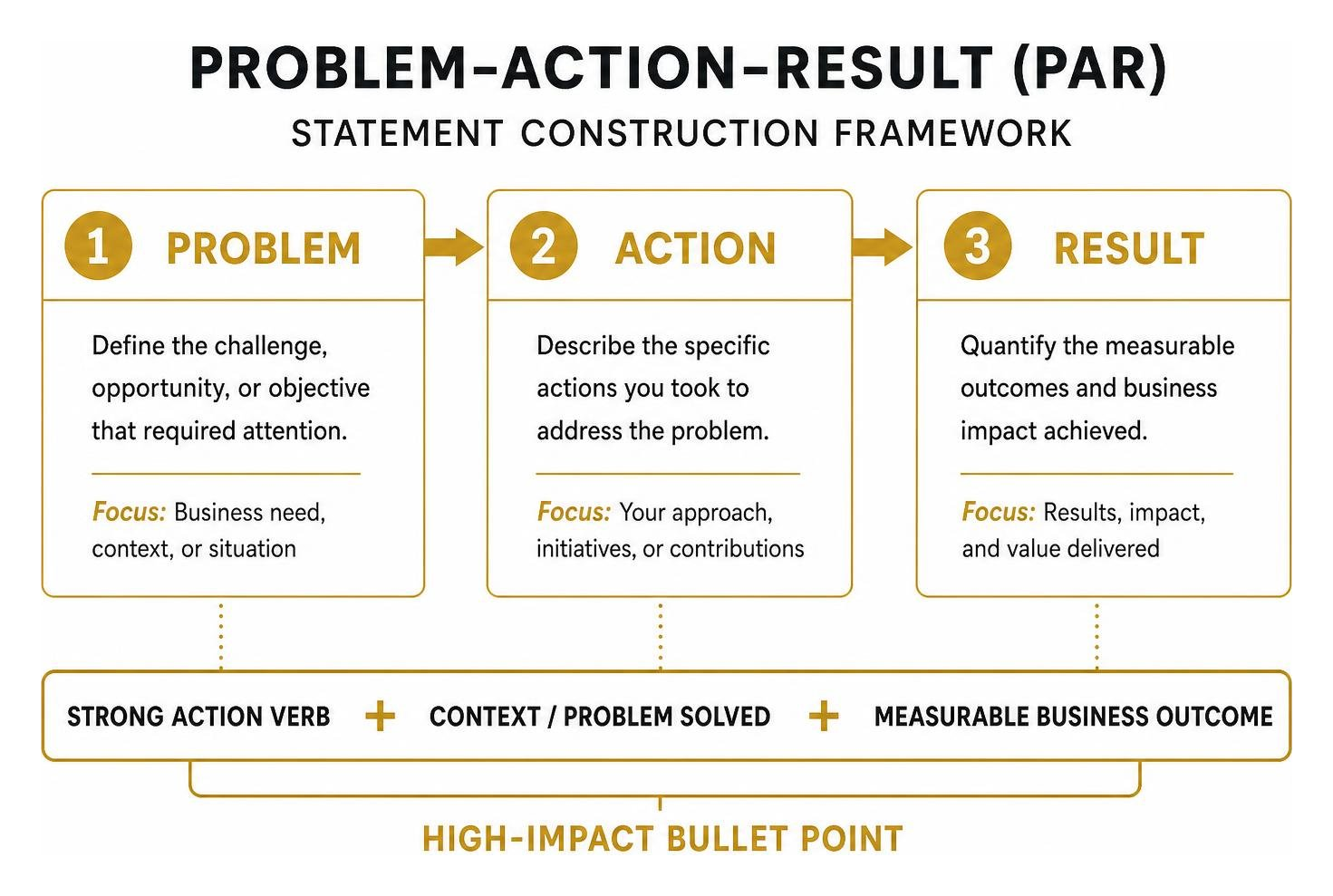
Use this high-impact formula for every bullet point: a strong action verb, followed by the context or problem you solved, and ending with a measurable business outcome.
Integrate industry-specific, results-oriented keywords and hard metrics to validate your achievements:
- Weak (Task-Focused): Responsible for managing sales operations and training new reps.
- Strong (Impact-Focused): Spearheaded a national sales enablement initiative across 4 territories, onboarding 18 account executives and accelerating time-to-quota by 28%.
- Weak (Task-Focused): Handled client tax return preparation and compliance reviews.
- Strong (Impact-Focused): Prepared 400+ complex corporate tax filings annually with a 91% accuracy rate, reducing client liability by an average of 15%.
Formatting Standards: Layout, Typography, and Margins
A polished visual layout ensures your document is easy to read for recruiters and parses cleanly through ATS software. Follow these structural formatting rules:
- Typography: Choose clean, professional fonts such as Calibri, Arial, Helvetica, Cambria, or Georgia. Maintain a 10–12 pt size for body text and a 14–16 pt bold style for your name and primary section headers.
- Margins & Spacing: Keep margins between 0.5 inches and 1.0 inch on all sides. Use consistent line spacing (1.0 to 1.15) to maintain visual balance and prevent dense blocks of text.
- Design Elements: Avoid decorative tables, text boxes, graphic progress bars, icons, and multi-column layouts, which can scramble data during ATS parsing.
For official federal standards and private-sector transition guidelines, refer to the IRS Guidance on Private Sector Resumes.
Optimizing Your Resume for ATS and Human Recruiters
Applicant Tracking Systems serve as algorithmic gatekeepers, sorting, scanning, and ranking inbound candidates before human eyes ever review a file.

To ensure your document ranks highly in ATS parsing systems, adhere to these technical parameters:
- Target Word Count: Keep your resume between 475 and 600 words for standard one-to-two-page resumes. This length provides optimal keyword density without diluting core achievements.
- Standard Section Headings: Use predictable headings like Professional Summary, Work Experience, Education, and Skills. Creative titles like Where I’ve Been or My Value Add can confuse ATS algorithms.
- File Format: Export your final resume as a standard PDF or Microsoft Word (.docx) file, ensuring the document contains searchable, selectable text.
To confirm that your document meets these standards, run your text through free ATS resume optimizer tools before submitting applications.
Aligning Your Resume Writing with Job Descriptions
Never distribute a single generic resume across multiple job openings. Tailoring your document for each application significantly improves screening pass rates.
- Extract Core Keywords: Review target job postings to identify recurring technical skills, methodologies, certifications, and leadership competencies.
- Integrate Relevant Phrases: Naturally incorporate these exact keywords into your professional summary, core competencies grid, and work history bullet points.
- Tailor for Senior Roles: Executive candidates should align their materials with strategic organizational outcomes. Reviewing targeted executive director resume examples and writing strategies can help refine your high-level messaging.
Synchronizing Your Resume with Your LinkedIn Profile
Your resume and your digital presence must tell a cohesive, aligned career story. Recruiters routinely cross-reference inbound resumes with candidate LinkedIn profiles. Discrepancies in job titles, dates of employment, or company names can undermine credibility.
While your resume is a targeted, concise summary of achievements, your LinkedIn profile serves as an interactive portfolio. Build a cohesive presence by applying our executive personal branding guide and completing a comprehensive LinkedIn profile optimization.
Complementary Application Assets and Common Pitfalls
A compelling resume is the centerpiece of your job application, but pairing it with a targeted cover letter creates a complete, persuasive package.
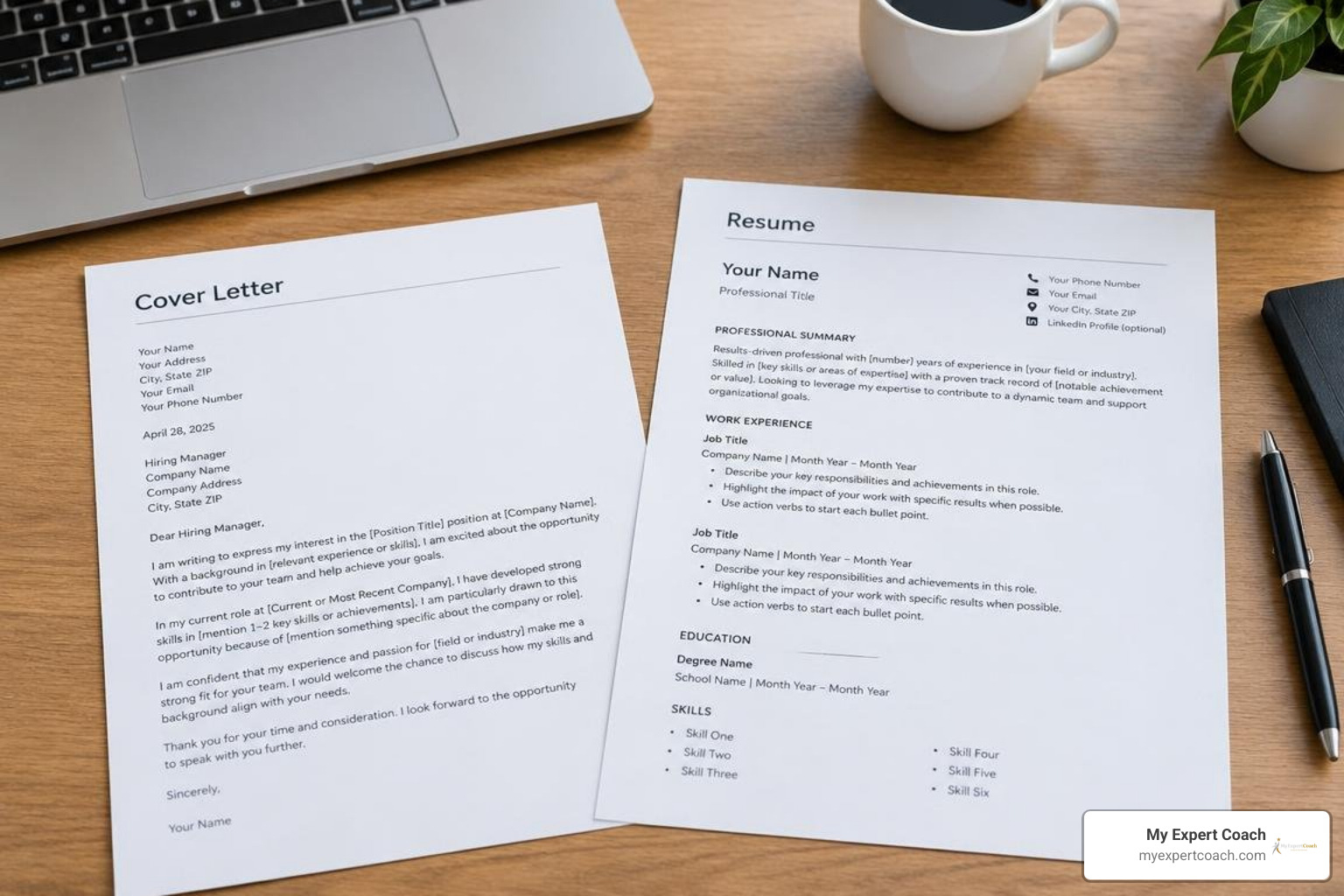
A targeted cover letter allows you to bridge career transitions, articulate cultural alignment, and provide context for your achievements. Follow this standard three-paragraph framework:
- The Hook & Introduction: State the target role, explain how you discovered the opportunity, and summarize your overarching value proposition.
- The Evidence & Value Alignment: Highlight 2 to 3 major career accomplishments that directly address the employer’s core business challenges.
- The Confident Close: Reiterate your enthusiasm for the position, express appreciation for their consideration, and outline the next steps for an interview.
For practical institutional models on cover letter strategy, explore the HBS Alumni Career Resources on Resumes and Cover Letters.
Critical Resume Mistakes to Avoid
Avoid these common pitfalls that can quickly disqualify an otherwise strong candidate:
- Including Personal Demographic Details: Never include your age, birth date, marital status, photograph, religious affiliations, or Social Security number. These details introduce potential bias and violate standard hiring protocols.
- Using First-Person Pronouns: Omit words like “I,” “me,” “my,” and “we.” Write in an active, implied first-person voice (for example, use “Directed cross-functional teams” instead of “I directed cross-functional teams”).
- Hiding Employment Gaps Ineffectively: Address career pauses transparently by grouping consulting work, continuing education, caregiving, or sabbatical periods with clear dates and concise explanations.
- Overlooking Grammatical Errors: Typos and inconsistent punctuation instantly erode professional credibility. Proofread thoroughly and have a peer or professional review your text.
Frequently Asked Questions About Resume Writing
How long should my resume be?
For early-career professionals and recent graduates, a one-page resume is the standard. Mid-to-senior professionals with 5 to 15+ years of relevant experience should use a focused two-page resume. Three-page resumes are reserved primarily for senior executive leaders, academic CVs, or federal applications requiring exhaustive documentation.
Should I include personal information like age or marital status?
No. In the private sector, demographic details such as age, marital status, race, gender, and personal photographs should be omitted. This protects your privacy and helps employers maintain objective, non-discriminatory hiring processes.
What is the ideal word count for an ATS-friendly resume?
The ideal target word count for a standard two-page resume is between 475 and 600 words. This range provides enough depth to naturally incorporate essential keywords, hard metrics, and context while maintaining clean scannability for human reviewers.
Conclusion
A well-crafted resume is more than a record of past responsibilities—it is an investment in your career trajectory. By selecting the right structural format, writing achievement-focused bullet points, and tailoring your materials for ATS algorithms, you turn your work history into a compelling case for an interview.
Career growth requires ongoing upkeep. Treat your resume as an evolving asset, updating your metrics, certifications, and leadership milestones as they occur rather than waiting until you launch a job search.
If you are ready to elevate your career materials with custom, high-impact strategies, explore our professional resume and LinkedIn writing services at My Expert Coach to position yourself for your next leadership role.