
table of contents
How to Become an Executive Resume Writer

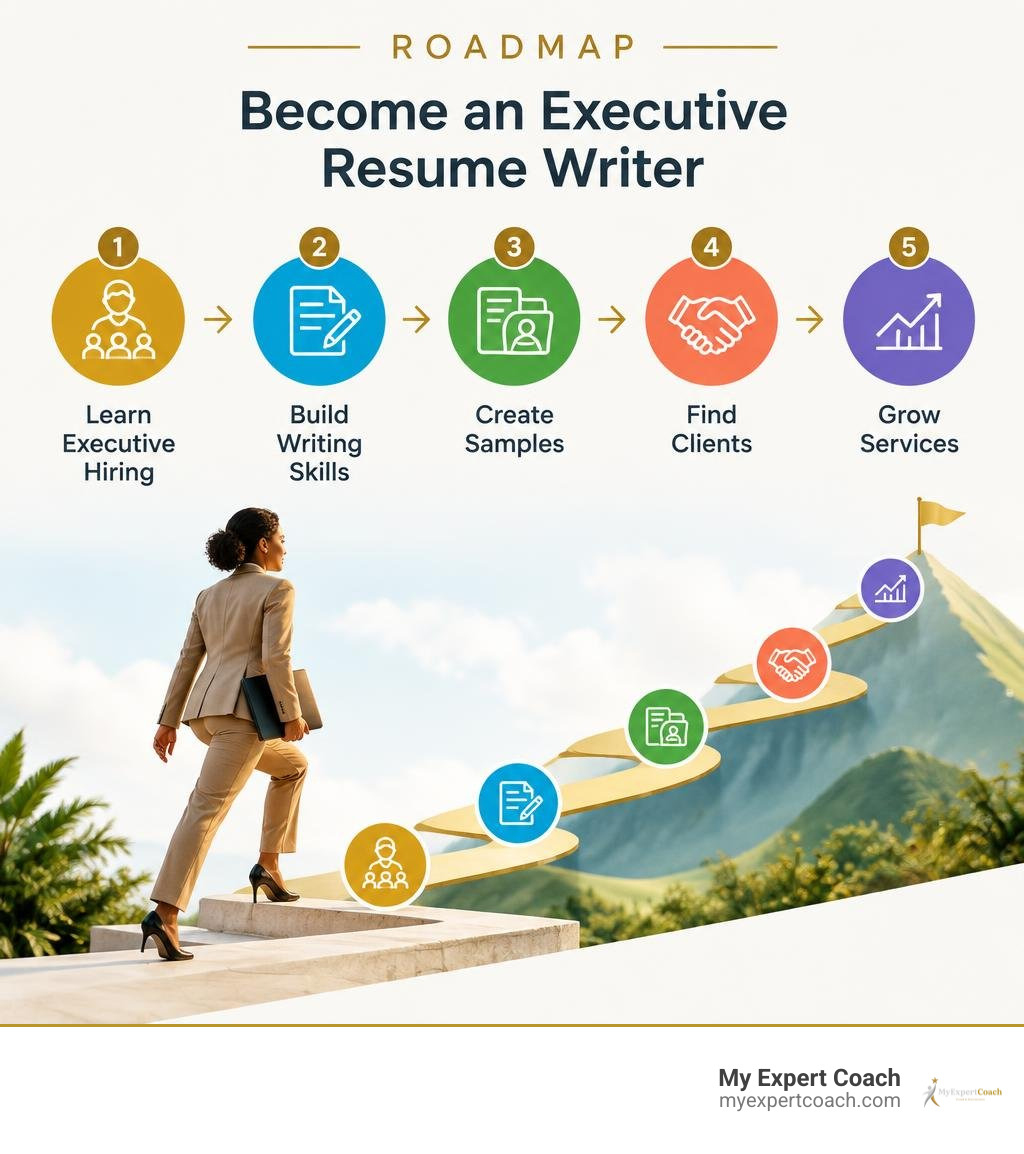
To become an executive resume writer, learn what senior-level hiring teams look for, then practice turning leadership results into clear, measurable stories. Build a small portfolio of tailored resumes and bios, get feedback from recruiters, and offer a defined service. As you gain clients, use referrals and LinkedIn to grow your business. A six-figure service is a business goal, not a guaranteed income.
I’m Sandy Spencer, a career coach with 38 years of experience in HR and executive recruiting who has helped advance more than 10,000 careers. If you searched for “how to become a executive resume writer,” the roadmap below shows where to start.
Essential Skills and Qualifications on How to Become a Executive Resume Writer
Stepping into executive resume writing requires a mindset shift away from standard career support. You are no longer cataloging daily task lists or summarizing entry-level duties; you are acting as a strategic brand architect for corporate leaders. Executive search committees, private equity partners, and boards of directors look for enterprise-wide impact, fiscal stewardship, and visionary transformation.
To succeed, you must possess strong business acumen. You should understand corporate governance, operational scaling, capital allocation, and market expansion. Having a background in corporate human resources, talent acquisition, or executive search provides an immense advantage. It allows you to speak the language of the C-suite and translate complex leadership histories into compelling value propositions. Many professionals launch their practices after mastering foundational career consulting services, leveraging their recruitment knowledge to bridge the gap between candidates and high-stakes hiring teams.
Educational Foundations: How to Become a Executive Resume Writer in 2026
While a formal degree in communications, business, or human resources provides a solid baseline, industry-recognized credentials demonstrate dedication and validate your technical expertise. As of 2026, leading credentials include:
- Certified Professional Resume Writer (CPRW): A cornerstone credential that tests rigorous grammar, strategic formatting, and narrative positioning.
- Certified Executive Resume Master (CERM): An advanced credential focusing specifically on C-suite leadership positioning, board biographies, and enterprise value narratives.
- Nationally Certified Resume Writer (NCRW): A credential emphasizing high-level writing mechanics, consultative intake methods, and strategic personal branding.
Continuous professional development is essential. Staying sharp requires studying organizational design trends, following private equity hiring shifts, and mastering the nuances of modern corporate leadership.
Mastering C-Suite Positioning vs Standard Resumes
Writing an executive resume requires shifting focus from operational execution to strategic vision. Entry-level and mid-career resumes outline what a person did; executive career documents articulate how an organization transformed under their guidance.
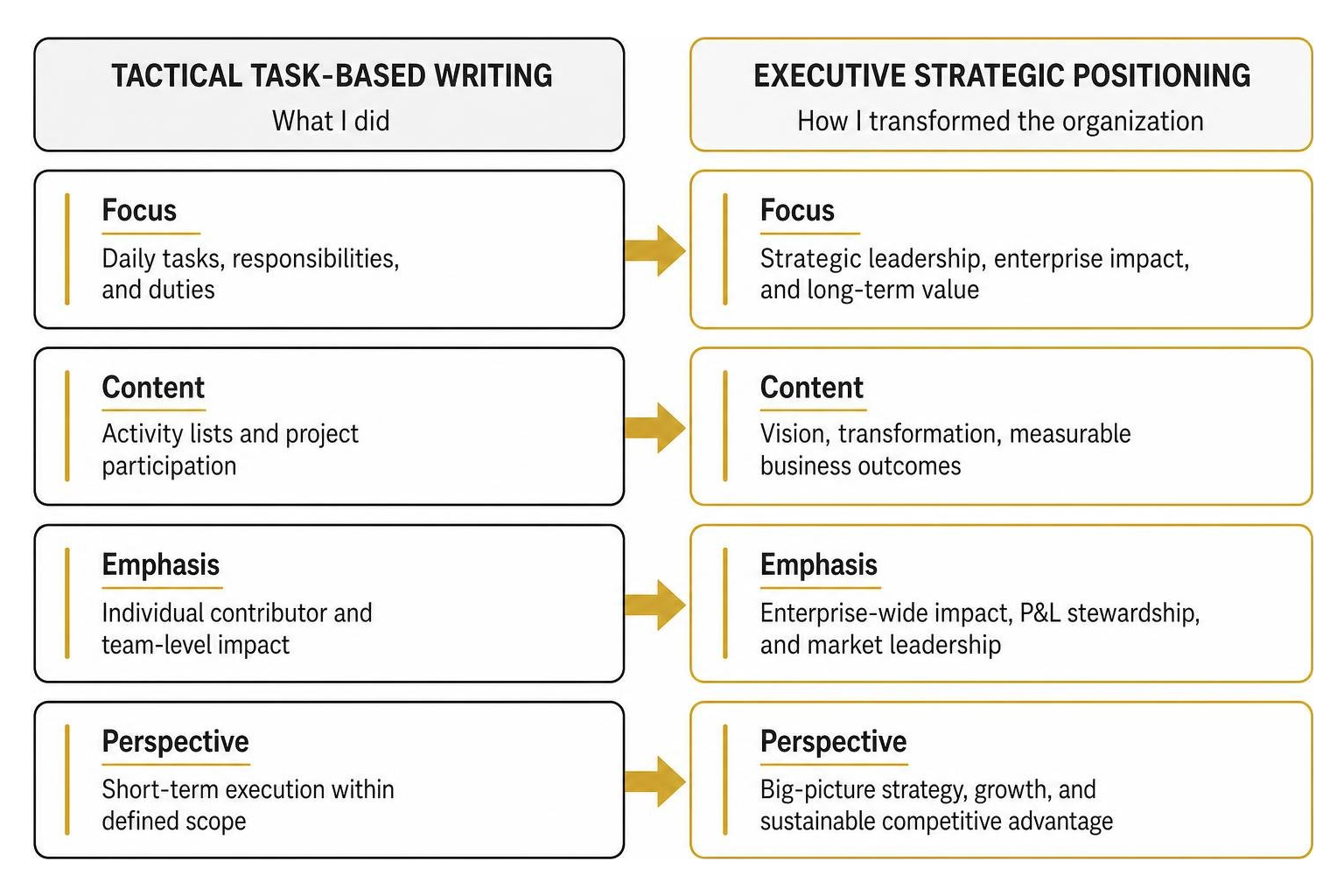
When partnering with leadership candidates, you must position their career trajectory through the lens of enterprise value:
- Strategic Leadership Scope: Clarify global oversight, organizational design, business unit restructuring, and cultural transformation.
- Financial and P&L Stewardship: Highlight exact profit-and-loss (P&L) accountability, operational budgets, revenue generation, and cost-containment initiatives.
- Governance and Stakeholder Management: Articulate direct collaboration with boards of directors, investors, audit committees, and regulatory bodies.
Navigating complex career pivots demands tailored documentation. Whether your client is moving from corporate leadership to advisory roles or navigating executive career transitions across distinct industries, you must deploy proven executive resume best practices that highlight transferable governance and enterprise problem-solving capabilities.
Core Components of High-Impact Executive Resumes and Bios
Executive hiring assets consist of a cohesive branding suite: the core resume, the executive biography, and the digital profile. High-impact documents immediately answer the board’s primary question: What distinct commercial advantage does this leader bring to our enterprise?
| Resume Dimension | Standard Professional Resume | Executive Leadership Resume |
|---|---|---|
| Primary Focus | Daily responsibilities and task execution | Enterprise strategy, vision, and governance |
| Financial Detail | Project budgets or department sales | Multi-million or multi-billion P&L accountability |
| Narrative Tone | Functional, operational, and tactical | Strategic, authoritative, and consultative |
| Document Length | 1 to 2 pages | 2 to 3 pages plus executive bio/addendum |
| Audience | Line managers and automated screeners | Executive search partners, CEOs, and Boards |
For an in-depth framework on narrative biographical formats, review this authoritative guide on how to write a corporate executive bio.
Step-by-Step Guide: How to Become a Executive Resume Writer Who Crafts Winning Bios
An executive bio provides a storytelling medium that complements the structured data of a resume. Often requested for board appointments, speaking engagements, and press introductions, a strong bio delivers a 360-degree view of executive authority.
- Step 1: Define the Narrative Value Proposition: Open with a commanding narrative paragraph establishing the executive’s industry stature, years of leadership, and core transformation strengths. For instance, an introductory statement might position an award-winning executive with 10 years of leadership experience in the textile manufacturing industry seeking a long-term, hands-on role with a Fortune 500 enterprise.
- Step 2: Detail Leadership Trajectory in Flowing Prose: Construct cohesive narrative sections outlining major career milestones, detailing enterprise turnaround stories and organizational growth.
- Step 3: Highlight Discrete Value Contributions: Extract headline achievements (such as M&A integration, EBITDA growth, or IPO execution) into bullet points beneath narrative overviews.
- Step 4: Incorporate External Validation: Conclude with dedicated sections for professional affiliations, board appointments, global awards, keynote appearances, and executive education to convey well-rounded authority.
Mastering this biographical structure is a core pillar of modern personal branding, allowing your clients to project credibility across multiple professional channels.
Integrating Modern ATS Compliance and Results-Driven Keywords
While C-suite recruitment relies heavily on personal referrals and retained search firms, executive documents must still navigate applicant tracking systems (ATS) and talent databases. Executive search firms routinely parse candidates through sophisticated databases to surface niche industry experience.
To ensure seamless parsing without sacrificing visual elegance:
- Maintain a clean typographical hierarchy without placing critical contact information or core skills inside nested tables, text boxes, or complex graphic layers.
- Incorporate high-yield leadership phrasing, pairing industry jargon with results-oriented recognition keywords that demonstrate measurable business impact.
- Audit client documents regularly using an optimizing resumes for ATS tool to confirm clear scannability across modern enterprise parsing software.
Recommended Software Stack and Formatting Tools for Executive Writers
To deliver executive-grade assets efficiently, professional writers rely on robust software stacks that balance aesthetic sophistication with strict technical compliance.
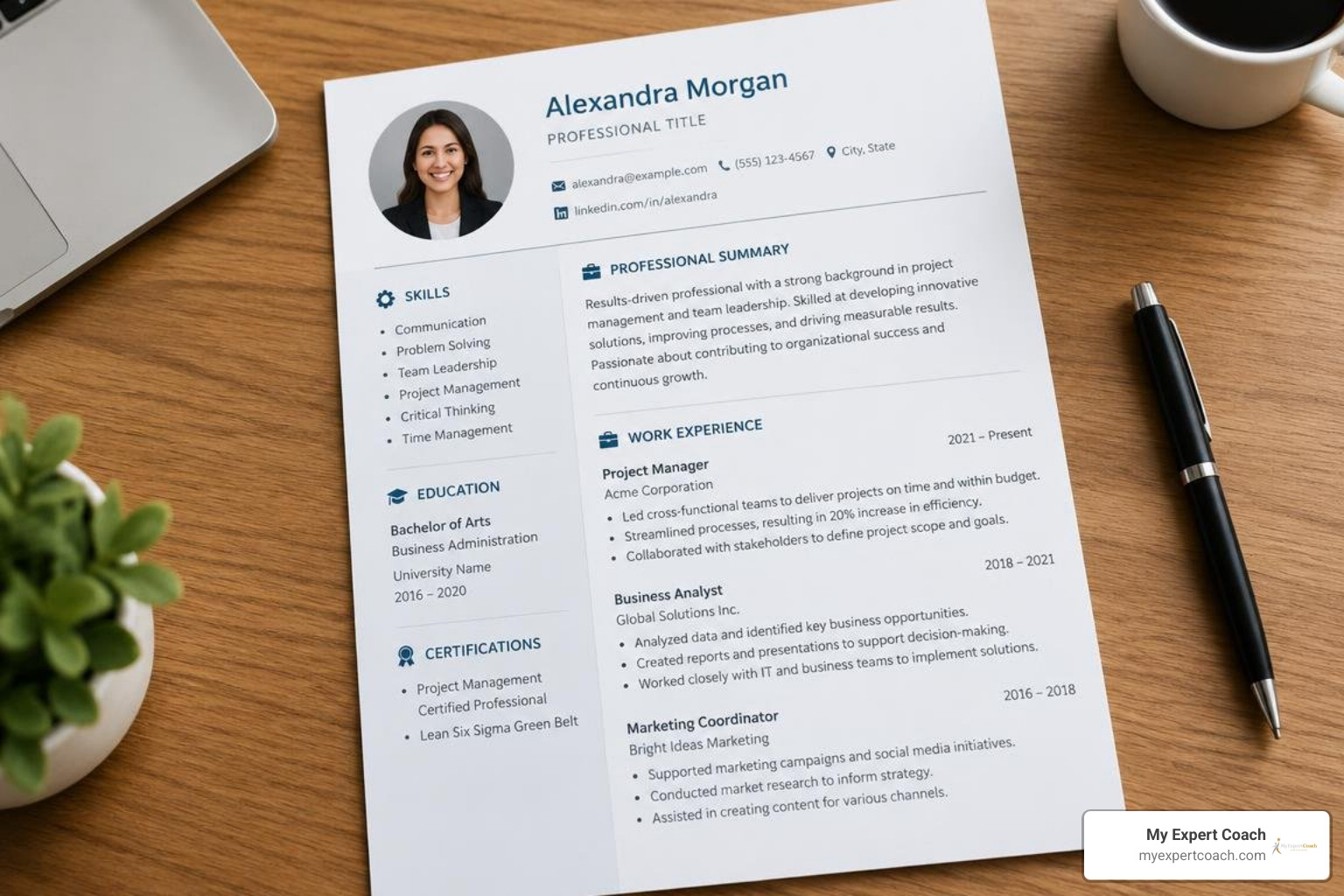
Creating bespoke materials means steering clear of generic, overused templates. Applying tailored modern executive resume strategies ensures your documents stand out in competitive C-suite candidate pools.
Evaluating Resume Design and Formatting Software
Selecting the right design and production tools depends on your workflow, design capabilities, and client collaboration needs.
| Software Platform | Key Strengths | Considerations | Best Use Case |
|---|---|---|---|
| Enhancv | Excellent design quality, usability, intuitive modern templates | Monthly subscription model | Contemporary executive layouts requiring polished visual appeal |
| Kickresume | Integrated AI drafting features, personal web portfolio hosting | Advanced customization can take time | Hybrid packages including personal career microsites |
| VisualCV | Straightforward usability, quick setup, clean typography | Fewer advanced layout controls | Rapid drafting and streamlined document styling |
| Canva | Complete visual design freedom, rich font library, free entry tier | Requires manual effort to maintain ATS-compliant structure | Creative executive one-sheeters and speaking one-pagers |
| Microsoft Word / Adobe InDesign | Full typography control, absolute formatting precision, zero cloud dependencies | Steeper learning curve (InDesign) | High-end bespoke resume and board dossier production |
Packaging LinkedIn Profile Optimization with Executive Resumes
A resume does not exist in isolation. Modern executive search consultants match incoming resumes against live digital footprints within seconds. As an executive resume writer, your packages should routinely include digital profile overhauls.
Ensure cross-platform alignment across all career assets:
- Reframe the executive headline to emphasize strategic value rather than an internal job title.
- Write an engaging, first-person “About” narrative that contextualizes the leader’s management philosophy.
- Align employment dates, corporate achievements, and milestone metrics with the newly drafted resume.
By optimizing LinkedIn profiles for leaders alongside their core documents, you offer comprehensive, integrated resume and LinkedIn strategies that deliver immediate, measurable market value.
Pricing, Packaging, and Client Delivery Strategies
Building a sustainable, six-figure writing service requires adopting a value-based pricing strategy. Executive clients evaluate services through the lens of return on investment (ROI). A leader securing a $350,000 to $700,000 C-suite position recognizes the strategic value of an expert partner who can articulate their market worth.
When positioning higher-tier offerings, consider pairing documentation services with specialized executive salary negotiation guidance to help clients maximize their total compensation packages during final offer stages.
High-Ticket Bundling: Resumes, Bios, and Interview Coaching
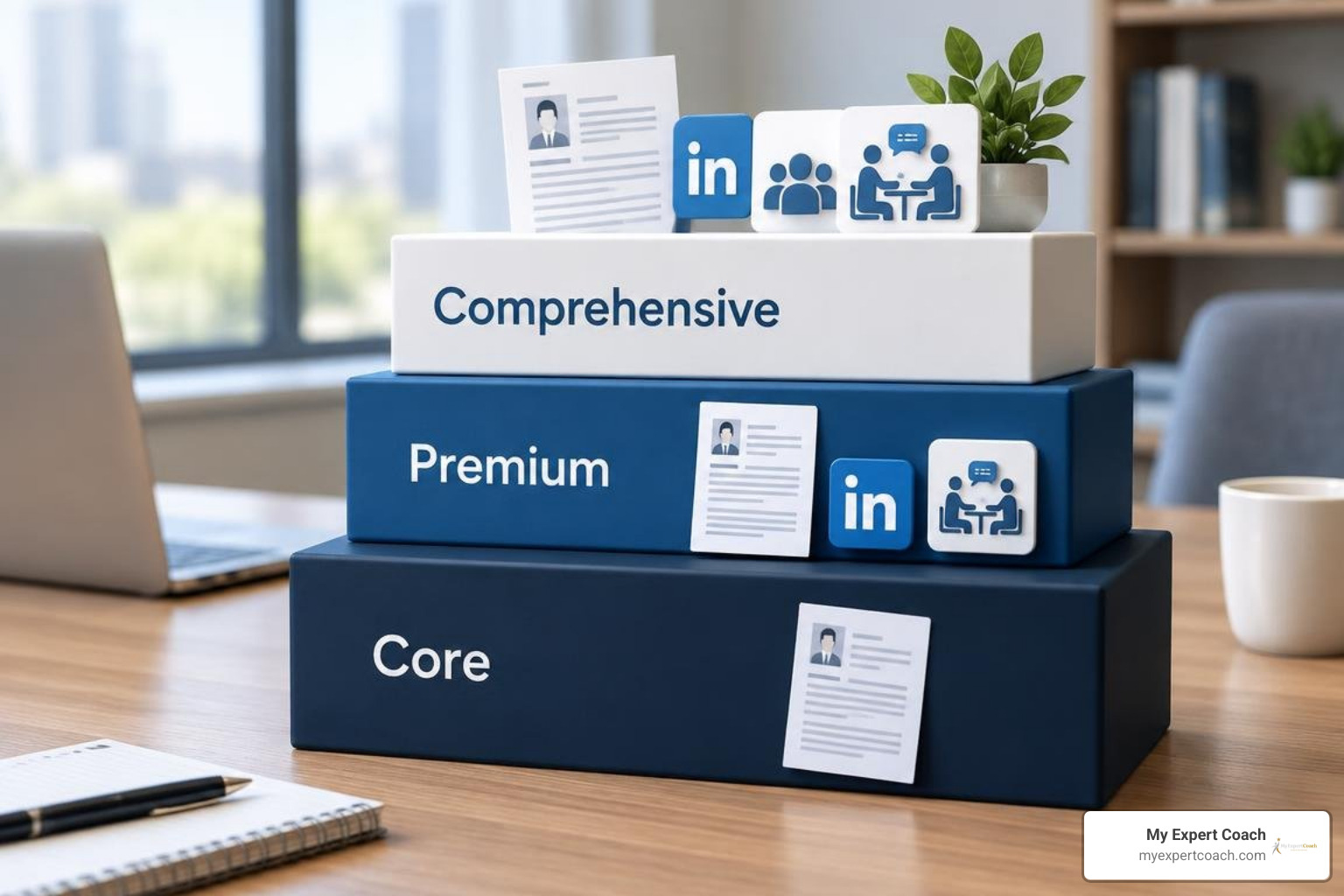
Structuring multi-tiered service bundles lets you provide end-to-end transformation while lifting average order values:
- Tier 1: Core Executive Package ($1,200 – $1,800)
- Bespoke Executive Resume (2-3 pages)
- Targeted Executive Cover Letter (such as crafting a business development executive cover letter)
- Comprehensive LinkedIn Profile Transformation
- Tier 2: Board & Leadership Portfolio ($2,200 – $3,500)
- Full Core Executive Package
- Narrative Executive Biography (1-page board/media profile)
- Executive One-Page Networking Brief / Deal Sheet
- Recruiter Outreach Strategy & Distribution Template
- Tier 3: Complete Executive Career Transition Retainer ($4,000 – $7,500+)
- Full Board & Leadership Portfolio
- Strategic Advisory Sessions & Target Company Mapping
- Dedicated interview coaching and preparation covering behavioral board scenarios and executive presentations
Marketing Your Business and Attracting Executive Clients
Attracting high-earning leaders requires positioning yourself as a peer and trusted advisor rather than an administrative vendor.
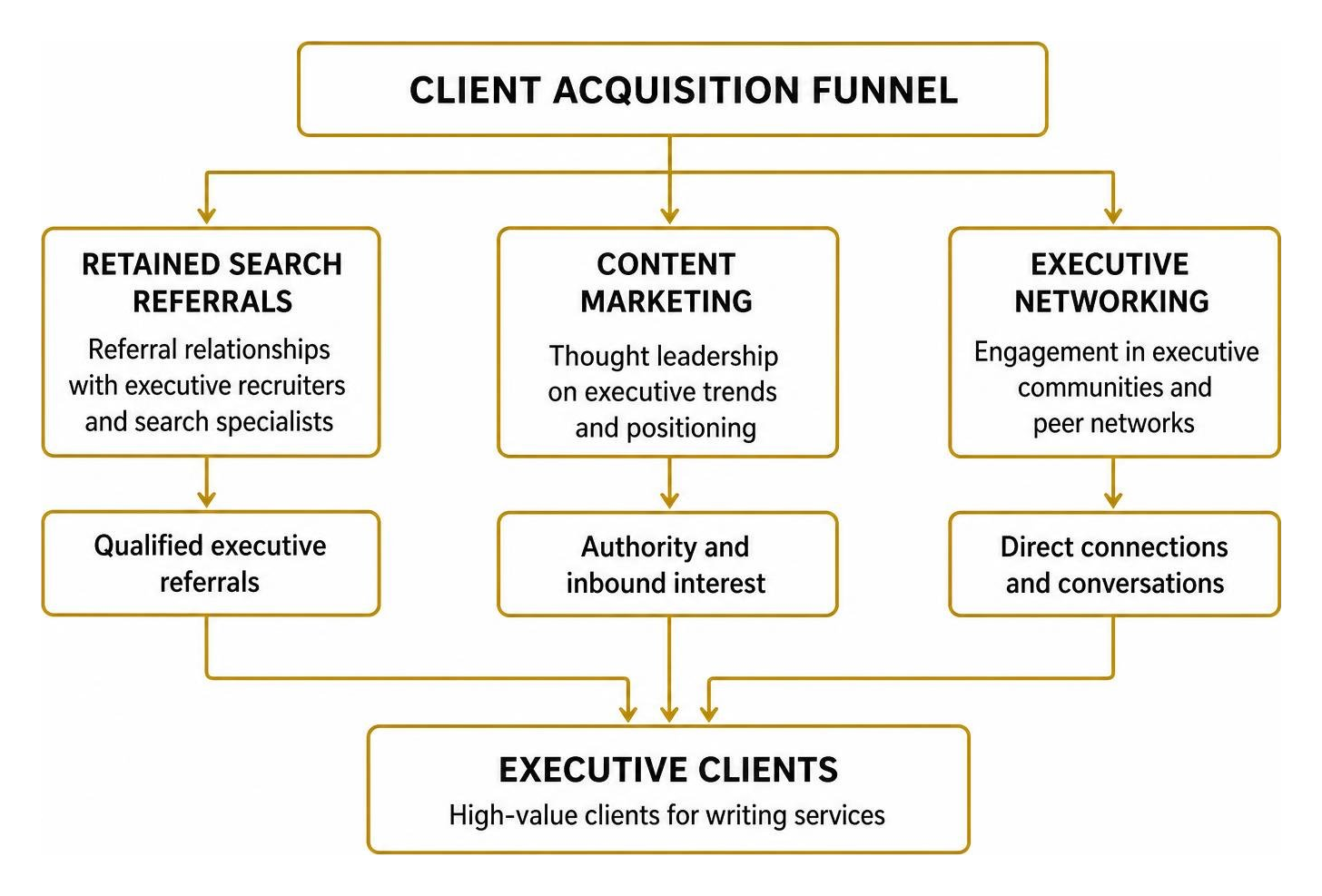
High-converting client acquisition funnels rely on consistent, value-driven execution:
- Thought Leadership Publishing: Share actionable frameworks on executive market shifts, C-suite positioning, and talent acquisition trends on LinkedIn.
- Case Studies and Transformations: Publish anonymized before-and-after narrative breakdowns demonstrating how strategic document positioning resolved executive transition bottlenecks.
- Strategic Partnerships: Establish referral relationships with executive recruiters, retained search specialists, and leadership development consultants who regularly meet qualified leaders needing career collateral upgrades.
By articulating sophisticated executive career transition strategies through your public content, you establish the foundational trust needed for building executive personal branding practices that attract premium inbound inquiries.
Building Authority Through Strategic Networking and Word-of-Mouth
Executive career services thrive on high-trust referrals. Senior executives rarely buy complex personal services via cold ads; they ask their peers, executive recruiters, and executive coaches for recommendations.
- Deliver High-Touch Onboarding: Treat the intake process as an executive interview. Use structured intake questionnaires and in-depth video strategy sessions to explore their career milestones.
- Cultivate Retained Search Alliances: Reach out to boutique search firms. Provide them with value by offering document updates for candidates they want to present to client boards.
- Implement Referral Workflows: Following a successful placement or client project completion, invite the executive to introduce colleagues embarking on career transitions.
Frequently Asked Questions About Becoming an Executive Resume Writer
How much can an executive resume writer earn per project?
Executive resume projects typically range from $1,000 to more than $4,000 per engagement, depending on seniority, document complexity, and bundled services (such as board bios and interview coaching). Writers who maintain consistent client pipelines and offer multi-tier packages can reach a six-figure gross revenue run rate with four to six comprehensive client engagements per month.
What certifications are recommended for executive resume writers?
The most recognized credentials are the Certified Executive Resume Master (CERM), Certified Professional Resume Writer (CPRW), and Nationally Certified Resume Writer (NCRW). Earning these credentials demonstrates technical writing proficiency, strategic visual formatting mastery, and a structured understanding of modern talent acquisition systems.
How do executive resume writers stay updated on executive hiring trends?
Professional executive resume writers monitor talent trends by reviewing quarterly hiring reports from major retained search associations, participating in career industry mastermind communities, building relationships with executive recruiters, and tracking corporate governance shifts across public and private equity domains.
Conclusion
Building a successful executive resume writing service requires blending sharp business acumen, narrative storytelling, and consultative client delivery. By positioning yourself as an indispensable branding advisor to senior leaders, you can build a respected, sustainable, and highly lucrative career practice.
If you want to refine your market insights and understand how modern leaders execute high-stakes career moves, discover comprehensive job search strategies to elevate your executive career services practice.